Turning the Hiroshima Accord into Action: Enhancing UK-Japan Defence Collaboration (Studio)
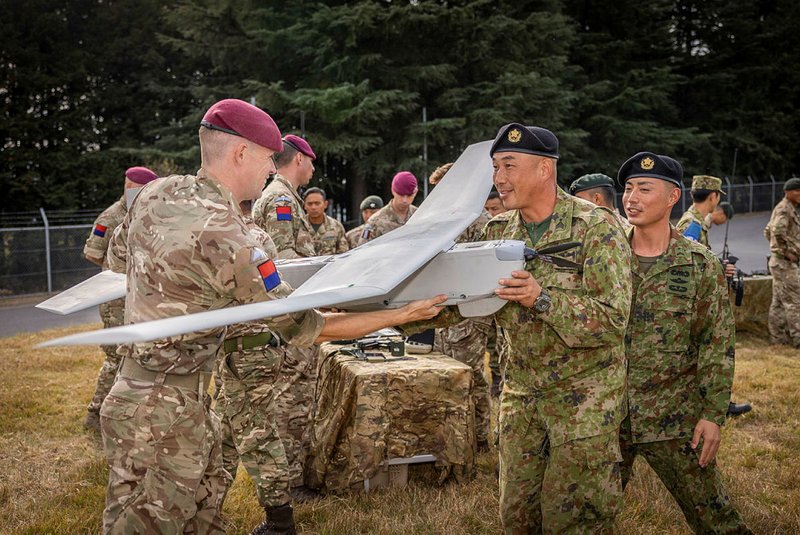
Soldier from the Royal Gurkha Rifles stands alongside his Japanese counterpart during Exercise Vigilant Isles in Somagahara Camp, Japan.
The UK-Japan strategic partnership leverages joint defence initiatives, advanced technologies, and SME integration to enhance military capabilities, foster innovation, and ensure regional and global stability through collective action and effective project management.


Brought to you in partnership with Fujitsu
In a world where global security dynamics are in constant flux, the strategic partnership between the UK and Japan has the potential to be a beacon of stability and innovation.
The Hiroshima Accord, a significant agreement between these two nations, heralds a new era of defence collaboration. Signed on 18 May 2023, this agreement aims to enhance cooperation across multiple domains, including defence, trade, technology, and environmental sustainability.
Strengthening Bilateral Defence Capabilities
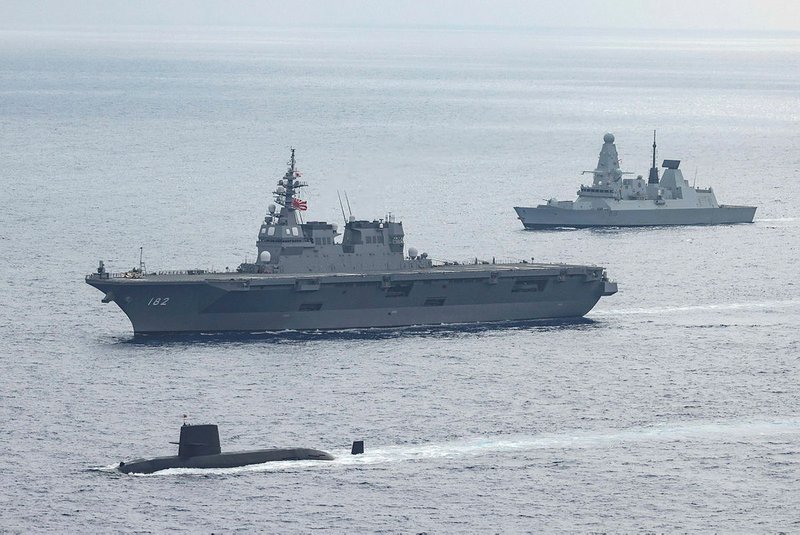
The Accord significantly strengthens military collaboration between the UK and Japan. This includes regular joint military exercises, shared defence procurement, and cooperative research and development in advanced military technologies.
Notably, the UK has committed to deploying its Carrier Strike Group to the Indo-Pacific in 2025 and doubling troop numbers in joint exercises.
Senior defence officials from both countries have highlighted the Accord’s operational benefits, noting that it will enhance joint operations and military presence in the Indo-Pacific while driving innovation and strengthening defence ties.
From Commitment to Action: Implementing the Hiroshima Accord
Nevertheless, transforming the Hiroshima Accord’s commitments into actionable defence projects requires careful planning and execution. This process involves navigating complex bureaucratic landscapes, integrating cutting-edge technologies, and ensuring these initiatives deliver tangible strategic and operational benefits.
Key steps for this transformation include effective project management, cross-national collaboration, and ongoing technological innovation. Addressing these elements ensures that the Accord’s commitments translate into real-world outcomes, enhancing the defence capabilities and operational readiness of both nations.
The practical aspects of this implementation are highlighted by the launch of joint science and technology programs and a new Cyber Partnership. These initiatives focus on areas such as cybersecurity and semiconductors, aiming to reduce reliance on Chinese manufacturing and improve supply chain resilience.
Harnessing Innovative Technologies for Defence Collaboration
Emerging technologies are reshaping global defence strategies. Innovations such as artificial intelligence, digital twins, and advanced analytics can significantly enhance defence collaboration between the UK and Japan. These technologies offer substantial operational advantages, from improving decision-making processes to increasing the efficiency of defence operations.
To effectively integrate these technologies into defence frameworks, both nations must focus on research and development, fostering an environment where innovation thrives. This approach helps maintain a technological edge and ensures defence capabilities remain at the forefront of global advancements.
A notable example is the strategic partnership between Imperial College London and the University of Tokyo to develop a UK-Japan Cleantech Innovation Hub and scale up the rapid development of green technologies.
Integrating SMEs and OEMs into Defence Projects
Small and medium-sized enterprises (SMEs) are vital for driving innovation and agility within the defence sector. Partnerships between original equipment manufacturers (OEMs) and SMEs can lead to the development of innovative solutions that enhance defence capabilities.
By creating a supportive ecosystem for SMEs, the UK and Japan can foster a dynamic and responsive defence sector capable of addressing modern threats.
Despite these promising steps, there remains a long road ahead. Significant challenges persist, from navigating complex bureaucratic landscapes to ensuring seamless technology integration and operational viability.
The journey to fully realise the ambitions of the Hiroshima Accord will require sustained effort, strategic foresight, and robust international cooperation.
Join the panel discussion at the Farnborough Airshow on Thursday, 25 July, to learn more about these themes and their practical implications.
- 10:50 am on 25 July: The UK and the Defence of Japan: Turning the Hiroshima Accord into Action



More from Studio
-
![How Pearson Engineering combines tradition with innovation for the demining mission (Video)]()
How Pearson Engineering combines tradition with innovation for the demining mission (Video)
At Eurosatory 2026, Pearson Engineering's Group CEO Ian Bell talked about the company's role in delivering specialist armoured engineering, route-clearance and demining capabilities to military customers around the world.
-
![Ukraine experience forces rethink of counter-UAS doctrine]()
Ukraine experience forces rethink of counter-UAS doctrine
A panel session at Eurosatory 2026 brought together industry, academia and the French armed forces to assess how Ukraine’s battlefield reality is reshaping counter-UAS (CUAS) technology, air defence doctrine and Western procurement priorities.
-
![Networked advantage: keeping unmanned systems in the loop with battlefield radio technology]()
Networked advantage: keeping unmanned systems in the loop with battlefield radio technology
Unmanned systems are powerful intelligence, surveillance and reconnaissance (ISR) assets and communication tools, but are often isolated from wider networks, limiting their potential. Industry is now tackling this challenge, empowering UxVs to act as integrated nodes across domains.
-
![Air defence at scale: Europe’s challenge of cost, integration and sustainability]()
Air defence at scale: Europe’s challenge of cost, integration and sustainability
The evolution of aerial threats is driving renewed investment in ground-based air defence across Europe. Yet beyond capability, a more pressing challenge is emerging: how to sustain air defence at scale, as rising costs, limited stockpiles and industrial production constraints place increasing pressure on existing structures.
-
![The path to a safer future – why technological innovation is key to successful mine clearance]()
The path to a safer future – why technological innovation is key to successful mine clearance
Landmines continue to present a persistent and constantly evolving global threat, and advances in technology are improving how the challenges posed by minefields are managed, while reducing risks to human life. The growing capabilities of autonomous and robotic systems, coupled with advanced sensor capabilities, are now fuelling industry’s responses to this pervasive danger.
-
![“The challenge is not demand, but delivery”: why rapid building of industrial capability is key to Europe’s future defence]()
“The challenge is not demand, but delivery”: why rapid building of industrial capability is key to Europe’s future defence
In today’s complex security landscape, military requirements are rapidly evolving across all domains. As European defence spending rises, industry is under growing pressure to expand production capacity, strengthen supply chains and accelerate delivery timelines to meet operational demand.