Turkish air defence system could pave way back to US fighter jet programmes
Local press describes the Siper system as a rival to the Russian S-400 Triumf. (Photo: Wikimedia Commons)
The Siper surface-to-air missile system may serve as an indigenous replacement for the Russian S-400 controversially acquired by Turkey and leading to its expulsion from the F-35 programme.


At the end of 2022, Turkey successfully test-fired its domestically built Siper long-range air defence missile system against a target 100km away.
‘A New Year’s gift to our nation as we enter the Turkish century from our defence industry,’ tweeted Ismail Demir, head of the Turkish Defence Industry Agency.
The Siper project is led by Turkey’s defence giants Aselsan and Roketsan, as well as the Scientific and Technological Research Council of Turkey.
Local media describes the system as a rival to the Russian S-400 Triumf, not unlike what Iran did when unveiled its Bavar-373.
Talking to Shephard about
Our news & analysis is now part of Defence Insight®
A Basic-level or higher Defence Insight subscription is now required to view this content.


More from Defence Notes
-
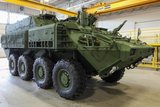
![Canada’s C$2 billion ACSV deal reinforces new defence industrial strategy as allies align]()
Canada’s C$2 billion ACSV deal reinforces new defence industrial strategy as allies align
General Dynamics Land Systems-Canada is the country’s first strategic partner under the Defence Industrial Strategy’s Strategic Partnership Framework, an effort to provide companies with confidence to invest and boost the defence labour force.
-
![New UK armed forces minister frames High North defence as vital to “homeland security”]()
New UK armed forces minister frames High North defence as vital to “homeland security”
The UK’s Minister for the Armed Forces Louise Sandher-Jones made her first appearance in the role before the House of Commons Defence Committee this week to highlight efforts to improve capability in the High North.
-
![Canada seeks to strengthen industrial ties with the US on classified programmes]()
Canada seeks to strengthen industrial ties with the US on classified programmes
Ottawa explores expanding defence-industrial cooperation with Washington into sensitive programmes, an approach that could reshape NORAD modernisation, strengthen North American supply chains and create new opportunities for defence contractors.
-
![UK’s latest defence robotics and autonomy competition looks to break new ground]()
UK’s latest defence robotics and autonomy competition looks to break new ground
The UK Ministry of Defence is backing early-stage, high-risk autonomy concepts that could redefine how military systems are developed and deployed.
-
![How AI is reshaping defence procurement through sustainment]()
How AI is reshaping defence procurement through sustainment
Artificial intelligence is not just changing how defence equipment is maintained but how defence programmes are won, creating new opportunities for industry by influencing acquisition decisions and shaping competition.