Raytheon Intelligence & Space provides equipment support to USMC
U.S. Marines observe an objective point during Exercise Raven in Nashville. (Photo: U.S. Marine Corps)
Raytheon Intelligence & Space expands logistics and equipment support for US Marine Corps as part of a $495million contract.


Raytheon Intelligence and Space (RI&S) will provide logistics and repair services for all US Marine Corps ground equipment under the new contract.
The contract is valued at $495million and has a duration period of five years.
The company will deliver more than 10,000 repaired parts per year to sustain the Marine corps’ combat and tactical ground equipment.
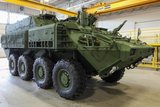
The equipment Raytheon will be responsible for repairing and maintaining ranges from armoured vehicles to communication systems and ground radars, like the AN/APG-79(V)4 AESA radar system.
The contract is an expansion of work the company has supported for 17 years.
The amount of equipment the company manages will double under the new contract and RI&S will support every major USMC installation in the world.
Bob Williams, vice president of Global Training and Logistics, RI&S, said ‘Our job is to ensure no mission is ever delayed because of a needed repair or missing part.’

You may also like
More from Defence Notes
-
![From systems integrator to multi-domain solutions provider (video)]()
From systems integrator to multi-domain solutions provider (video)
Philipp von Brandenstein, Head of Corporate Communications at Rheinmetall, explains how Eurosatory 2026 marked a new stage in the company's evolution.
-
![US Pentagon pushes for major reform of defence acquisition system]()
US Pentagon pushes for major reform of defence acquisition system
The US Department of Defense has requested new contracting authorities from Congress, using the Army's MV-75 Cheyenne programme to demonstrate how competition, digital engineering and closer industry collaboration could accelerate acquisitions.
-
![US speeds up B61-13 nuclear bomb production as programme moves further ahead of schedule]()
US speeds up B61-13 nuclear bomb production as programme moves further ahead of schedule
The US government plans to accelerate production even further after achieving key B61-13 milestones months ahead of schedule, as the programme advances amid growing US-China strategic competition.
-
![Canada’s C$2 billion ACSV deal reinforces new defence industrial strategy as allies align]()
Canada’s C$2 billion ACSV deal reinforces new defence industrial strategy as allies align
General Dynamics Land Systems-Canada is the country’s first strategic partner under the Defence Industrial Strategy’s Strategic Partnership Framework, an effort to provide companies with confidence to invest and boost the defence labour force.
-
![New UK armed forces minister frames High North defence as vital to “homeland security”]()
New UK armed forces minister frames High North defence as vital to “homeland security”
The UK’s Minister for the Armed Forces Louise Sandher-Jones made her first appearance in the role before the House of Commons Defence Committee this week to highlight efforts to improve capability in the High North.
-
![Canada seeks to strengthen industrial ties with the US on classified programmes]()
Canada seeks to strengthen industrial ties with the US on classified programmes
Ottawa explores expanding defence-industrial cooperation with Washington into sensitive programmes, an approach that could reshape NORAD modernisation, strengthen North American supply chains and create new opportunities for defence contractors.