Danes commit to more Ukraine military aid
Danish M113 APCs pictured during an exercise in Germany. (Photo: US Army/PFC Shardesia Washington)
Denmark will chip in $113 million as part of a 26-nation commitment to provide an extra $1.55 billion in military support for Ukraine.


Prime Minister Mette Frederiksen announced on 11 August that Denmark will provide an additional €110 million ($113.23 million) in military weapons, equipment and training for Ukraine to aid its resistance against the ongoing Russian invasion.
Speaking at a 26-nation donor conference in the Danish capital Copenhagen, also attended by UK defence secretary Ben Wallace and the Ukrainian defence minister Oleksei Reznikov, Frederiksen said: ‘I hope that we here today can agree on even more contributions.’
The donor conference resulted in a commitment to provide a total of more than $1.55 billion in additional military support for Ukraine.
Significant military support already provided by Denmark for Ukraine includes 25 Heidrun mini-UAVs for ISR missions, Harpoon anti-ship missiles and launchers, M113 APCs and M72 single-shot anti-armour rocket launchers.



More from Defence Notes
-
![US speeds up B61-13 nuclear bomb production as programme moves further ahead of schedule]()
US speeds up B61-13 nuclear bomb production as programme moves further ahead of schedule
The US government plans to accelerate production even further after achieving key B61-13 milestones months ahead of schedule, as the programme advances amid growing US-China strategic competition.
-
![Canada’s C$2 billion ACSV deal reinforces new defence industrial strategy as allies align]()
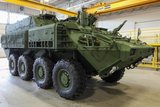
Canada’s C$2 billion ACSV deal reinforces new defence industrial strategy as allies align
General Dynamics Land Systems-Canada is the country’s first strategic partner under the Defence Industrial Strategy’s Strategic Partnership Framework, an effort to provide companies with confidence to invest and boost the defence labour force.
-
![New UK armed forces minister frames High North defence as vital to “homeland security”]()
New UK armed forces minister frames High North defence as vital to “homeland security”
The UK’s Minister for the Armed Forces Louise Sandher-Jones made her first appearance in the role before the House of Commons Defence Committee this week to highlight efforts to improve capability in the High North.
-
![Canada seeks to strengthen industrial ties with the US on classified programmes]()
Canada seeks to strengthen industrial ties with the US on classified programmes
Ottawa explores expanding defence-industrial cooperation with Washington into sensitive programmes, an approach that could reshape NORAD modernisation, strengthen North American supply chains and create new opportunities for defence contractors.