Why the Arctic could be Russia’s next target
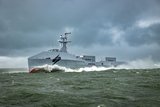
NATO members already conduct regular Arctic warfare exercises, and may yet need to place greater emphasis on threats in the region. (Photo: UK MoD/Crown Copyright)
Moscow has been upgrading and re-equipping its bases in the Far North, and international affairs and defence experts say that the possibility of a war in the region cannot be ruled out.


The war in Ukraine has shown that the Russia’s territorial ambitions can be threat to all of Europe. As the Arctic is a strategic region both from a military and economic perspective, it might yet be Moscow’s next target.
Indeed, President Vladimir Putin’s armed forces have more assets in the Arctic than NATO countries and have been upgrading and re-equipping their bases in the area in the last few years, which is a warning signal.
The Kremlin also revised its Arctic policy in February emphasising the need to prioritise the country’s interests in the region. All mentions of the Arctic Council, which is
Our news & analysis is now part of Defence Insight®
A Basic-level or higher Defence Insight subscription is now required to view this content.




More from Defence Notes
-
![Patria OPTIME and ILIAS: Orchestrating operational readiness across every domain]()
Patria OPTIME and ILIAS: Orchestrating operational readiness across every domain
Patria OPTIME is a sustainment concept that integrates MRO and lifecycle services into one solution, powered by the ILIAS digital defence platform
-
![US military seeks common controllers for drones and robotic systems]()
US military seeks common controllers for drones and robotic systems
US Air Force, Army, Marine Corps and Special Operations Command initiatives signal demand for interoperable uncrewed systems control, creating opportunities for suppliers of hardware, software and integration services.
-
![“Start planning much earlier”: delivering defence support in an era of disruption]()
“Start planning much earlier”: delivering defence support in an era of disruption
In Conversation… The geopolitical landscape is increasingly uncertain, with the UK and its allies confronting the most unpredictable international environment for decades. To adapt, defence readiness must begin long before assets reach the front line, forging a resilient support enterprise that can thrive in a time of ongoing disruption, argue the partners of Team ORION.
-
![“Communicating at mission speed”: why data security is essential for operational success]()
“Communicating at mission speed”: why data security is essential for operational success
In conversation… Everfox’s Chairman and Chief Executive Officer Dave Wajsgras and Managing Director, International, Colin McKinty discuss the critical importance of information security in defence, minimising insider risk and the company’s international growth strategy with Shephard’s Andrew White.
-
![“Engage with the operational problem”: how software innovation can boost UK defence]()
“Engage with the operational problem”: how software innovation can boost UK defence
In Conversation… Shephard’s Andrew White talks to Zafer Şen, CEO and co-founder of OBSS, about the future of command-and-control software in the age of artificial intelligence, and his company’s ambitions in the UK defence market.
-
![“Capital follows confidence” as defence courts private money]()
“Capital follows confidence” as defence courts private money
Outside investment and the direction in which venture money flows may reveal what defence will buy years before formal programmes begin.