Rolls-Royce firmly in the picture for TF-X engine collaboration, says SSB
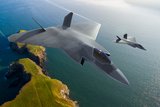
Turkish Aerospace on 19 March released a CGI video of its TF-X future fighter. (Image: Turkish Aerospace)
Ismail Demir, head of Turkish defence procurement agency SSB, said Rolls-Royce is involved in helping to develop the engine to power the TF-X future fighter aircraft.


The head of the Turkish Defence Industry Presidency (SSB), Ismail Demir, has revealed important information about the roadmap for the turbofan engine to power the Turkish TF-X fighter aircraft.
The first TF-X prototypes will be powered by F-16 engines (F110-GE-129) sourced from the US, although Demir went on to say that three other options are being considered simultaneously.
The first and most likely solution appears to be a partnership with Rolls-Royce, as Turkey has no experience in manufacturing turbofan engines for jet aircraft.
A second option is for TRMotor (wholly owned by SSB) to work with Turkish
Our news & analysis is now part of Defence Insight®
A Basic-level or higher Defence Insight subscription is now required to view this content.

More from Air Warfare
-
![USAF eyes sensor and weapon upgrades as MH-139A Grey Wolf achieves IOC]()
USAF eyes sensor and weapon upgrades as MH-139A Grey Wolf achieves IOC
The Grey Wolf has entered operational service nearly three years later than originally planned, while new sustainment contracts indicate that some UH-1Ns could remain supported until 2031.
-
![Extending mission readiness: where XR adds real value in pilot, crew and maintenance training]()
Extending mission readiness: where XR adds real value in pilot, crew and maintenance training
Extended reality (XR) is becoming increasingly relevant in military aviation training, adding a flexible layer to an integrated ecosystem spanning the pilot, crew, and maintenance domains.
-
![August crewed air review: KC-390 momentum builds as demand in the tanker market grows]()
August crewed air review: KC-390 momentum builds as demand in the tanker market grows
The KC-390 is building a growing international operator base, but competition in the transport and tanker market is increasingly likely to depend on interoperability, commonality and the strength of supporting ecosystems. Meanwhile, Boeing’s KC-46 and Airbus’s A330 also gained ground in August.