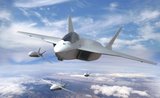
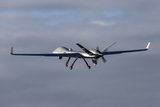
Leonardo plans to fly uncrewed fighters alongside M-346 aircraft by mid-2026
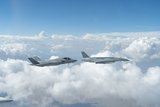
The M-346 will be the crewed aircraft flown as part of these tests. (Photo: Leonardo)
The two uncrewed fighter aircraft will be made in conjunction with Baykar, which joined forces with Leonardo under LBA Systems in June 2025 to develop and produce uncrewed aerial systems for the international market.


Leonardo plans to fly two uncrewed fighter aircraft controlled by a M-346 light attack fighter aircraft this year, according to company CEO Roberto Cingolani, with first demonstrations by May to then be made public for mid-2026.
The test flight will involve crewed-uncrewed teaming (CUC-T) with Leonardo’s M-346 light attack aircraft as the crewed ‘mother’ aircraft controlling two uncrewed fighters as loyal wingman aircraft, Cingolani explained.
“The concept is, while we wait for the six-generation fighter…you can already provide to customers that don’t have the opportunity to buy very big systems, an adjunct that can be operated in conjunction with existing aircrafts,”
Our news & analysis is now part of Defence Insight®
A Basic-level or higher Defence Insight subscription is now required to view this content.


More from Air Warfare
-
![Connecting the layers: how networks can secure the future of European air defence]()
Connecting the layers: how networks can secure the future of European air defence
The rise of drones has reshaped the threat landscape for all European militaries. For industry, future defensive strategies must carefully balance a mix of passive and active measures to address the evolving danger, based around a highly integrated and responsive network of sensors and effectors.
-
![Germany could secure greater influence through sixth-generation fighter partnership with Sweden and Spain]()
Germany could secure greater influence through sixth-generation fighter partnership with Sweden and Spain
Germany is assessing potential pathways for a future sixth-generation fighter capability, including discussions with GCAP partners and Sweden.
-
![UK eyes lightweight satellite communications for UAVs]()
UK eyes lightweight satellite communications for UAVs
The UK is seeking to extend the operational reach of uncrewed aerial vehicles, reflecting growing demand for compact, energy-efficient technology to support beyond-line-of-sight operations.
-
![Loyal wingman programmes gather pace as US and European procurement plans take shape]()
Loyal wingman programmes gather pace as US and European procurement plans take shape
Northrop Grumman, Airbus and Anduril are positioning their uncrewed aerial vehicles for future collaborative combat aircraft contracts in a market that is forecast to exceed $36 billion.