ROK awards Elbit Systems $74 million munitions contract
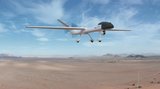
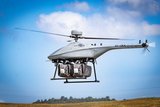
Elbit Systems is bringing its experience develops UAVs, such as Hermes Starliner, to its partnership with KAI. (Photo: Elbit Systems)
Elbit Systems continues to gain awards in the Asia-Pacific region as South Korea orders airborne munitions.


The Ministry of National Defense in South Korea has contracted Elbit Systems to supply a range of airborne munitions as part of the Precision Fires Programme of the Republic of Korea Air Force.
Multiple contracts were awarded in an aggregate amount of approximately $74 million from the Defense Acquisition Program Administration of South Korea. The contracts will be performed over five years.
Elbit Systems has been steadily increasing its presence in the region. As part of Team Redback, Hanwha and Elbit Systems developed an IFV for the Australian Land 400 Phase 3 programme.
Earlier this year, in March, Korean Aerospace Industries and Elbit Systems signed an MoU to develop a next-generation UAS solution for the ROK Armed Forces.
In other news, Elbit Systems has received a number of significant contracts from Europe recently.
This month, Elbit Systems UK was contracted to deliver a pathfinder project for the British Army’s Collective Training Transformation Programme.
In the same period, Babcock, Elbit Systems and QinetiQ were awarded a £100 million contract to deliver EW systems to the UK’s RN.
Meanwhile, on 30 September, Estonia ordered 120mm mortars, worth up to €15 million, from Elbit Systems.


More from Air Warfare
-
![E-3 Sentry encryption equipment no longer meets US security requirements, says USAF]()
E-3 Sentry encryption equipment no longer meets US security requirements, says USAF
The US Air Force says the Sentry fleet’s DAR-400 encryptor can no longer keep pace with changing security requirements and warns that a failure could affect US operations and data security.
-
![Spain air focus: Mature UAV market rewards early supplier engagement]()
Spain air focus: Mature UAV market rewards early supplier engagement
Spain accounts for 5% of European military UAV spending, broadly in line with its share of the continent’s wider defence market. What sets the country apart, however, is how much of that spending has already been committed, reflecting Spain's earlier adoption of the capability.
-
![New US Army UH-60M Black Hawk order bridges uncertain path to MV-75 transition]()
New US Army UH-60M Black Hawk order bridges uncertain path to MV-75 transition
The US$234 million award for 16 Sikorsky UH-60Ms preserves near-term production, but funding uncertainty and an undefinitised contract leave the US Army’s long-term Black Hawk requirements unresolved.
-
![V-22 Osprey safety upgrade moves towards wider fleet installation under $35.5 million deal]()
V-22 Osprey safety upgrade moves towards wider fleet installation under $35.5 million deal
Bell Boeing will supply 73 additional ODSSHI kits as NAVAIR prepares to introduce predictive drive-system monitoring across US and Japanese V-22 fleets.
-
![AFA 2026: US Air Force examines uncrewed cargo aircraft for contested logistics]()
AFA 2026: US Air Force examines uncrewed cargo aircraft for contested logistics
The US Air Force is evaluating demonstrators for uncrewed cargo missions as it considers logistics requirements across the Pacific and other contested environments.