Paris Air Show: NATO brokers Greek deal to acquire Safran UAVs
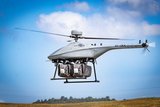
Greece has ordered four Patroller UAVs from Safran via the NATO Support and Procurement Agency. (Photo: Safran)


The Greek Army has chosen Safran Electronics & Defense to modernise its UAV inventory, adding four new Patroller tactical drones to its current Sperwer fleet.
The NATO Support and Procurement Agency (NSPA) was tasked by the Greek government to enter into negotiations with Safran. In February 2023 it became the first tactical UAS to be certified to NATO’s STANAG 4671 airworthiness standard.
Based on the Stemme S15 aircraft, Patroller has a small logistic footprint which, according to Safran, reduces operating costs. The aircraft is powered by A 115hp Rotax 914F engine.
Related Articles
Safran demonstrates Patroller surveillance capabilities at OCEAN2020
Greece gets new Israeli Orbiter 3 drones under Spike deal
Paris Air Show: Romania orders first batch of Watchkeeper X drones
The UAS can be operated both manually and autonomously with an LoS range of 200km and a range with SATCOM of 1,000km.
Patroller is typically fitted with a Euroflir 410 EO/IR pod for ground surveillance, combined with a COMINT sensor or synthetic aperture radar detecting moving targets.
The platform can be fitted with a multimode surveillance radar for maritime missions, enabling long-range detection of maritime activity over a large zone.
This version also includes an Automatic Identification System (AIS) to perform ship classification, with final confirmation performed with the Euroflir 410.
In 2016, the French Army selected the Patroller for its Tactical Drone System (SDT) requirement. Safran received a contract worth approximately $341.7 million in April that year to deliver three Patroller systems comprising 14 UAVs and five GCS between 2018 and 2019.
Greece took delivery of a total of 16 Sperwer UAVs.
Related Programmes in Defence Insight
Related Equipment in Defence Insight


More from Air Warfare
-
![New US Army UH-60M Black Hawk order bridges uncertain path to MV-75 transition]()
New US Army UH-60M Black Hawk order bridges uncertain path to MV-75 transition
The US$234 million award for 16 Sikorsky UH-60Ms preserves near-term production, but funding uncertainty and an undefinitised contract leave the US Army’s long-term Black Hawk requirements unresolved.
-
![V-22 Osprey safety upgrade moves towards wider fleet installation under $35.5 million deal]()
V-22 Osprey safety upgrade moves towards wider fleet installation under $35.5 million deal
Bell Boeing will supply 73 additional ODSSHI kits as NAVAIR prepares to introduce predictive drive-system monitoring across US and Japanese V-22 fleets.
-
![AFA 2026: US Air Force examines uncrewed cargo aircraft for contested logistics]()
AFA 2026: US Air Force examines uncrewed cargo aircraft for contested logistics
The US Air Force is evaluating demonstrators for uncrewed cargo missions as it considers logistics requirements across the Pacific and other contested environments.
-
![Germany air focus: Europe’s leading near-term air market targets domestic industry]()
Germany air focus: Europe’s leading near-term air market targets domestic industry
Between 2026 and 2032, almost a quarter of EU aircraft spending is expected to come from Germany. While crewed programmes seek modernisation and replacement, uncrewed opportunities look to introduce entirely new capabilities, with both highlighting sovereignty and domestic production.