Modified 757 aircraft planned to inform GCAP sensors and communications takes flight
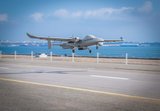
Excalibur will be equipped with Leonardo’s next-generation sensor technology demonstrators. (Photo: Leonardo)
The Boeing 757, dubbed Excalibur, was equipped with new side and belly pods and assessed for stability during flight. The aircraft will now undergo further engineering work at QinetiQ’s Boscombe Down facility in Wiltshire, England.


Leonardo’s Excalibur Boeing 757 technology demonstrator aircraft has successfully completed the first phase of modification and flight testing in an evaluation of new side and belly pods. The programme is a joint effort between the Italian company, 2Excel and the UK Ministry of Defence.
Excalibur is being overhauled into a flying laboratory for combat air technology as part of the UK’s Future Combat Air System (FCAS), which will include the core fighter being developed under the Global Combat Air Programme (GCAP). It will also evaluate a broader range of capabilities such as uncrewed aircraft, information systems and weapon systems.
The pods added to the aircraft will host the Integrated Sensors, Non-Kinetic Effects (ISANKE) and Integrated Communications Systems (ICS) that Leonardo UK and its international partners are developing as part of their work on GCAP.
Related Articles
How FCAS and GCAP fighter jet programmes could converge at subsystem level
GCAP alliance signs treaty for sixth-generation fighter and establishes UK as programme HQ
UK GCAP fighter effort can only survive if more funds are allocated, expert warns
Further modification to the Excalibur aircraft will include a fighter jet-style nose cone, to host advanced radar-based sensor demonstrators.
Excalibur is expected to fly with advanced new ISANKE & ICS technology on-board over the next few years to de-risk and accelerate the domain’s development programme and in turn support the ambitious timescales of GCAP.
Related Programmes in Defence Insight


More from Air Warfare
-
![July drone digest: Sovereign production takes centre stage at Farnborough]()
July drone digest: Sovereign production takes centre stage at Farnborough
Farnborough International Airshow (FIA) 2026 revealed the growing scale of the UK’s uncrewed ambitions, with companies showcasing new CCA, autonomous wingmen and surveillance drones, while sovereign production emerged as a key factor for multiple programmes.
-
![FIA 2026: Bell highlights MOSA-driven growth path for MV-75 Cheyenne]()
FIA 2026: Bell highlights MOSA-driven growth path for MV-75 Cheyenne
Bell Flight’s modular open-systems approach for the US Army’s MV-75 Cheyenne could open doors for international allies and suppliers once locked out by closed rotorcraft architectures.
-
![Maximise survivability with advanced electronic warfare (video)]()
Maximise survivability with advanced electronic warfare (video)
BAE Systems’ all-digital EW delivers 360-degree threat awareness in contested environments, boosts survivability, and cuts lifecycle costs.
-
![US Air Force seeks avionics upgrades for ageing T-38 Talon as T-7A Red Hawk delays persist]()
US Air Force seeks avionics upgrades for ageing T-38 Talon as T-7A Red Hawk delays persist
The USAF is looking for commercial avionics solutions to improve the T-38 Talon’s reliability, readiness and flight safety as continued T-7A Red Hawk delays increase the likelihood that the legacy trainer will remain in service longer than planned.
-
![British Army’s Project Corvus selection highlights new era of drone sovereignty]()
British Army’s Project Corvus selection highlights new era of drone sovereignty
The UK’s choice of the Tekever AR5 for Project Corvus reflects a wider shift in military drone procurement towards solutions that centre on sovereignty and domestic production, moving away from overseas reliance.