How FCAS and GCAP fighter jet programmes could converge at subsystem level
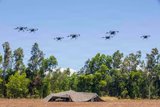
The European Initiative for Collaborative Air Combat will focus on interoperability of crewed or uncrewed platforms and new and legacy aircraft and subsystems. (Photo: BAE Systems)
The European Initiative for Collaborative Air Combat will bring together nearly 40 industry partners from 11 countries to focus on interoperability for European air forces’ mission management. Discussion of FCAS seems inevitable and the project may aid in bringing FCAS and GCAP closer to each other.


Dassault Aviation hosted a kick-off meeting for the European Initiative for Collaborative Air Combat (EICACS) project with its industrial and research partners in early February.
The company was awarded the contract for EICACS last December as the coordinator that seeks to bring together 37 industrial partners and research organisations from 11 EU countries.
The initiative is supported by €75 million ($80,5 million) from the EU within the framework of the 2021 programme of the European Defence Fund (EDF), but the estimated total cost of the effort will reach around $88 million.
The EDF defines EICACS as a project that will
Our news & analysis is now part of Defence Insight®
A Basic-level or higher Defence Insight subscription is now required to view this content.



More from Air Warfare
-
![US Army extended-range CUAS missile ramjet work to continue through December 2029]()
US Army extended-range CUAS missile ramjet work to continue through December 2029
Northrop Grumman’s US$18.8 million XRC propulsion contract runs through December 2029, but performance targets and the pathway to operational fielding remain undisclosed.
-
![Saab’s GlobalEye gains ground as Canada’s aircraft procurement tilts towards Europe]()
Saab’s GlobalEye gains ground as Canada’s aircraft procurement tilts towards Europe
Canada’s interest in negotiating a procurement of Saab’s GlobalEye airborne early warning and control aircraft signals its readiness to reduce its reliance on US defence technology as trade tensions with its North American neighbour mount.
-
![US Air Force CCA programme to achieve multiple milestones in the coming months]()
US Air Force CCA programme to achieve multiple milestones in the coming months
The US Air Force is preparing to select mission-autonomy software, fire a missile from the FQ-42 Vengeance and test both CCA designs alongside crewed fighters at 2026 Emerald Flag.