MBDA team picked for France’s Larinae loitering munition project
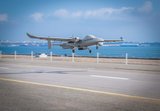
MBDA has been selected for France's Larinae loitering munition project. (Photo: MBDA)
The French defence innovation agency (AID) has selected a consortium led by MBDA for its Larinae loitering munition project.


France’s Larinae project seeks to rapidly develop a loitering munition capable of striking a hardened target at a range of 50km.
Under Larinae, a team consisting of Nexter, EOS Technologie and TRAAK has also been awarded a contract to develop an armour-piercing loitering munition.
According to the European missile maker, MBDA’s concept ‘MUTANT’ is based on a ‘Minimum Viable Product’ approach and focused on user requirements.
Related Articles
Nexter selected to develop loitering munition for French military
India receives first batch of ALS-50 loitering munitions from Tata
Uvision sees loitering munition market blooming and diverging at Paris Air Show
The new munition benefits from MBDA technologies, including the Akeron family, to ensure performance in neutralising armoured and mobile targets.
MUTANT also utilises advances in civil and military UAVs to offer ‘a munition with the best cost/performance ratio’.
MBDA called MUTANT ‘a natural complement’ to Akeron MP and LP.
Demonstrations under the Larinae effort are scheduled to take place next year.
MBDA said these demos would benefit from self-financed work carried out by the company since 2022, which has enabled the first MUTANT MTO flights with SME partner Delair.
French Ministry of Armed Forces spokesperson Hervé Grandjean stated in a press conference in May 2022 that the DGA and AID were seeking to acquire loitering munitions under two programmes, Colibri and Larinae.
MBDA is also in the running for the Colibri effort – which seeks a low-cost loitering munition with a much shorter range of 5km.
The MBDA-Novadem Colibri proposal is based on a rotary-wing drone more suited to urban environments.
Related Programmes in Defence Insight
Larinae: Medium-range loitering munition [France]
Colibri: Short-range loitering munition (Uncontracted) [France]
Colibri: Short-range loitering munition (Contracted) [France]
Related Equipment in Defence Insight



More from Air Warfare
-
![July air forces review: Farnborough steals the headlines as programmes develop]()
July air forces review: Farnborough steals the headlines as programmes develop
The biannual Farnborough International Airshow 2026 was the backdrop in July for scores of deals, partnerships and announcements, including developments in the multinational next-generation Global Combat Air Programme and the UK’s $486 million trainer aircraft requirement.
-
![FIA 2026: Bell highlights MOSA-driven growth path for MV-75 Cheyenne]()
FIA 2026: Bell highlights MOSA-driven growth path for MV-75 Cheyenne
Bell Flight’s modular open-systems approach for the US Army’s MV-75 Cheyenne could open doors for international allies and suppliers once locked out by closed rotorcraft architectures.
-
![Maximise survivability with advanced electronic warfare (video)]()
Maximise survivability with advanced electronic warfare (video)
BAE Systems’ all-digital EW delivers 360-degree threat awareness in contested environments, boosts survivability, and cuts lifecycle costs.
-
![US Air Force seeks avionics upgrades for ageing T-38 Talon as T-7A Red Hawk delays persist]()
US Air Force seeks avionics upgrades for ageing T-38 Talon as T-7A Red Hawk delays persist
The USAF is looking for commercial avionics solutions to improve the T-38 Talon’s reliability, readiness and flight safety as continued T-7A Red Hawk delays increase the likelihood that the legacy trainer will remain in service longer than planned.