Spain earmarks $1.6 billion for Hurjet trainer aircraft acquisition
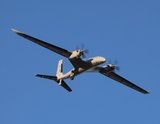
TAI believes the Spanish Hurjet aircraft agreement will open doors to other NATO countries wanting to acquire training and light attack aircraft. (Photo: TAI)
Spain’s Defence Minister told the Senate Defense Commission on 27 June of the decision to acquire Turkish Aerospace Industries’ (TAI) trainers as the country seeks to replace its Northrop F-5M aircraft.


Spain has earmarked a sum of €1.37 billion (US$1.6 billion) for its new generation advanced trainer aircraft programme, which will be used to aquire Turkish Aerospace Industries’ (TAI) advanced Hurjet trainer.
The first delivery of six Hurjet aircraft to Spain will be made by 2028, with a total of 18 to be in service by 2029 Spanish Defence Minister, Margarita Robles told Spanish lawmakers. According to the minister, the sum will allow for the development and training of pilots, obtaining between 28 to 30 aircraft.
The Spanish influence on the Turkish design was stressed and will arrive “already Spanishised” –
Our news & analysis is now part of Defence Insight®
A Basic-level or higher Defence Insight subscription is now required to view this content.



More from Air Warfare
-
![US military plans multi-UAV trials with Northrop Grumman quantum-navigated Lumberjack]()
US military plans multi-UAV trials with Northrop Grumman quantum-navigated Lumberjack
An undisclosed US military branch is preparing to evaluate multiple Lumberjack Group 3 drones equipped with SandboxAQ’s AQNav magnetic-navigation system. Shephard spoke with Northrop Grumman and SandboxAQ to find out more.
-
![Akinci: How Baykar turned the UAV into an African and Middle Eastern export success]()
Akinci: How Baykar turned the UAV into an African and Middle Eastern export success
From billion-dollar industrial partnerships in the Middle East to rapid military off-the-shelf deliveries in Africa, Baykar has tailored the Akinci to the needs of very different customers. Defence Insight data shows how flexibility, price and Turkish supply-chain independence have helped drive exports.
-
![US Pentagon pushes procurement of dismounted counter-UAS capabilities]()
US Pentagon pushes procurement of dismounted counter-UAS capabilities
The US services are investing in lighter, autonomous and networked systems to protect mobile troops from drone threats.
-
![US Army extended-range CUAS missile ramjet work to continue through December 2029]()
US Army extended-range CUAS missile ramjet work to continue through December 2029
Northrop Grumman’s US$18.8 million XRC propulsion contract runs through December 2029, but performance targets and the pathway to operational fielding remain undisclosed.