Italy looks to advance development of airborne electronic warfare initiatives
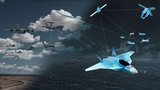
A conceptual rendering of the multinational GCAP sixth-generation combat aircraft, with ELT Group contributing to the development of its ISANKE and ICS. (Image: Leonardo)
Italy’s ELT Group involvement in airborne electronic warfare initiatives, including developing systems for the Eurofighter Typhoon and future sixth-generation combat aircraft, has been focused on integrated sensing, non-kinetic effects and communications.


Italy’s ELT Group has disclosed details of several ongoing airborne electronic warfare (EW) initiatives that support established defence programmes, while also advancing systems for future sixth-generation combat aircraft. The company has been actively involved in EW programmes for the Italian Air Force and next-generation aircraft projects.
According to information shared with Shephard, the Rome-based ELT Group is providing EW systems for various platforms, including the Eurofighter Typhoon combat aircraft and the Leonardo AW101 medium-lift helicopter.
One key area of involvement for ELT is the development of the new Praetorian Defensive Aids Subsystem (DASS) for the Typhoon, a project undertaken
Our news & analysis is now part of Defence Insight®
A Basic-level or higher Defence Insight subscription is now required to view this content.


More from Air Warfare
-
![France earmarks further $11.6 billion for missiles and drones amid rearmament push]()
France earmarks further $11.6 billion for missiles and drones amid rearmament push
The revised funding allocation will see up to 23% of the additional budget put towards stockpiles of munitions, with the country’s GDP spending expected to reach 2.5% by 2030.
-
![UK SMEs remain vulnerable in effort to help build sovereign capabilities, JCNSS report warns]()
UK SMEs remain vulnerable in effort to help build sovereign capabilities, JCNSS report warns
The report comes as heads of industry bodies warn that the delayed defence spending plan has left smaller and medium sized businesses in stasis, unable to plan or seek out further investment.
-
![Norway revitalises effort to acquire a tactical-class UAV with $103 million competition]()
Norway revitalises effort to acquire a tactical-class UAV with $103 million competition
Norway first scoped the requirement in 2022, and included it in a defence strategy document in 2023. The announcement of a new framework agreement appears to have breathed fresh life into the effort.
-
![March Drone Digest: Long-range, low-cost loitering munitions are changing warfare economics]()
March Drone Digest: Long-range, low-cost loitering munitions are changing warfare economics
The effective use of the Shahed-136 in the Iran war has highlighted the need for countries to acquire a domestically produced, low-cost, long-range loitering munition, with the US, Turkey and European nations all at various stages of developing a similar capability.