Insitu Pacific and Innovaero to develop uncrewed long-range strike concept
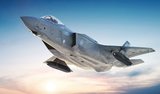
A partnership between IPL and Innovaero will aim to deliver solutions that offer direct effects in engagement zones without exposing crews in larger air assets to risk. (Photo: IPL)
The system has been designed for integration with existing Australian Defence Force systems, and will be developed, tested and deployed using common ground control station and software.


InsituPacific (IPL) and Innovaero have entered into a collaboration to develop an integrated solution for long-range strike capabilities using UAS.
The collaborative effort will focus on combining IPL’s Integrator, specialising in intelligence, surveillance, and reconnaissance (ISR), with Innovaero’s One-Way Loitering (OWL) munition.
According to Andrew Duggan, MD of IPL, the approach will aim to deliver direct effects in the engagement zone without exposing crews in larger air assets to risk. The concept has been strategically designed for integration with existing Australian Defence Force systems.
The collaborative system will be developed, tested and deployed using IPL’s common ground control station (GCS) and INEXA software, enabling operators to command both UAS and OWL munitions through the common GCS.
The development and testing phase for the Integrator/OWL system has been anticipated to extend through 2023, with the announcement following a Memorandum of Agreement established between IPL and Innovaero in July 2021.
‘Our collaboration with Insitu Pacific builds on our work with Defence in Australia to develop an Australian loitering-munitions capability and offers an integrated solution for long-range UAS target detection and effective engagement,’ said Simon Grosser, CEO of Innovaero Group.


More from Air Warfare
-
![Saab’s GlobalEye gains ground as Canada’s aircraft procurement tilts towards Europe]()
Saab’s GlobalEye gains ground as Canada’s aircraft procurement tilts towards Europe
Canada’s interest in negotiating a procurement of Saab’s GlobalEye airborne early warning and control aircraft signals its readiness to reduce its reliance on US defence technology as trade tensions with its North American neighbour mount.
-
![South American EW demand balances capability against cost]()
South American EW demand balances capability against cost
South American air forces are weighing advanced electronic warfare capabilities against limited budgets as Peru selects Viper Shield and BAE Systems targets smaller airborne platforms.
-
![September crewed air review: established platforms retain their grip on the market]()
September crewed air review: established platforms retain their grip on the market
With many next-generation capabilities still years from operational readiness, several of the month’s largest developments demonstrated that governments remain willing to invest heavily in aircraft with proven capabilities and established support networks.
-
![Will the US Navy F/A-XX and the USAF F-47 compete for production capacities?]()
Will the US Navy F/A-XX and the USAF F-47 compete for production capacities?
The two sixth-generation fighter programmes could battle for engineering talent and production lines before deliveries begin, testing Boeing’s industrial expansion plans.