“Dramatic leaps in processing capability”: how GDMS–UK is evolving mission systems for the modern battlespace
In Conversation... Shephard’s Gerrard Cowan talks to Sam Steggall, GDMS–UK’s Senior Director – Air and Naval UK, about the company’s extensive and proven in-country capability to deliver complex avionics solutions and its key role on major Royal Air Force and Royal Navy aircraft programmes.


This In Conversation interview is brought to you by Shephard in partnership with GDMS–UK.
General Dynamics Mission Systems–United Kingdom (GDMS–UK) has a long history of delivering advanced avionics solutions for military platforms. The company’s approach continues to evolve to meet the challenges of an increasingly complex and data-driven battlespace, embracing fast-paced technological advances and the need for rapid delivery, according to Sam Steggall, Senior Director – Air and Naval UK.
GDMS–UK can trace its history in the UK back to 1974, when it began producing avionics from its site in Hastings, East Sussex, which remains as one of its two UK bases today. It has provided these capabilities for the UK Ministry of Defence (MoD) and allied nations, working on aircraft ranging from Hawk and Jaguar, through to Tornado, Harrier, Wildcat, Merlin and the Eurofighter Typhoon.
Today, its portfolio covers advanced technologies including tactical data links, situational awareness, and secure communications providing air-land integration and data-at-rest security solutions for fixed and rotary-wing aircraft and uncrewed vehicles. It partners with major UK and international OEMs – such as BAE Systems and Leonardo – as well as local SMEs.
For example, it provides mission computing capability for the Eurofighter Typhoon and has integrated the Link 16 tactical data link onto the Tornado, AW159 Wildcat, and CP-140 Aurora platforms. The company is also increasingly active in the uncrewed domain; which includes collaborating with TEKEVER to deliver a distributed acoustic processing suite for the deployment of sonobuoys from an AR5 UAS. More broadly, uncrewed and autonomous systems are becoming a growing focus across UK defence, with the company well positioned to support national initiatives such as the Land Autonomous Collaborative Platform and Atlantic Bastion programme.
Domain knowledge
GDMS–UK’s foundation is built on the “significant amount of domain knowledge” that the company has built over 50 years. This experience has led to increasingly refined, mature and ruggedised technologies, and means that GDMS–UK has developed a solid foundation across its product range.
“We have a number of technologies that we focus on that we're very good at, such as mission computing, secure recorders and tactical data links,” Steggall emphasised. “We are evolving what we've already developed and continue to adapt it going forward.”
For example, he highlighted the company’s work on the P-8A Poseidon with the Royal Air Force at RAF Lossiemouth. GDMS–UK announced in October 2024 that it had been selected by the MoD to provide a post-flight analysis capability for the aircraft, delivering an acoustic replay and intelligence exploitation system to support requirements around data processing, exploitation and dissemination (PED).
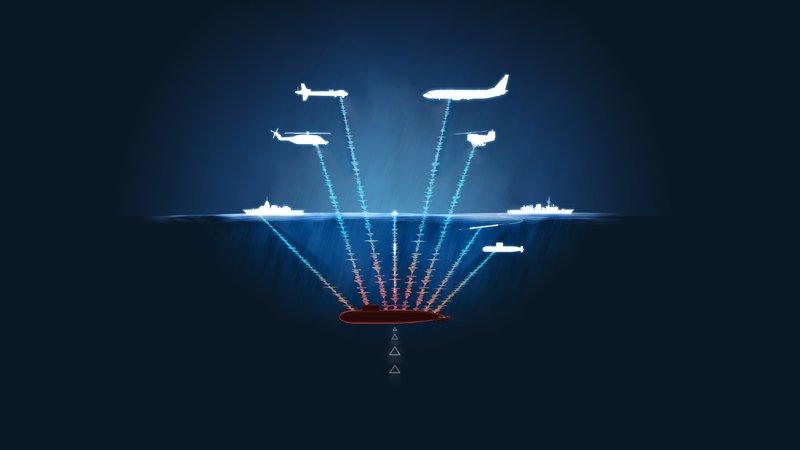
The ability to supply such support rapidly from a domestic base demonstrates the effectiveness of its UK-based domain knowledge, Steggall said.
“We can have people on-site very quickly if something needs to change in the software, if we need to do a rapid update, or even just provide support,” he explained.
Major programmes
This domain knowledge has developed over decades across the lifespan of major programmes, perhaps best highlighted through the work on Typhoon and Wildcat, Steggall noted.
GDMS–UK has been a longstanding partner on Typhoon, from the early development of the platform into production in the 1990s. That work continues for both the UK and international partners, including Spain, Italy, Germany and now Türkiye.
This support is evolving to meet the needs of the modern battlespace; GDMS–UK is developing next-generation avionics for the Typhoon, including working with BAE Systems on the new radar system upgrade for the aircraft. The company will continue to provide further advances in computing, displays, communications and beyond, Steggall added, not only producing modern equipment but managing and addressing any obsolescence issues in legacy systems.
This work also positions the company to support future combat air initiatives, including the Global Combat Air Programme, the UK’s New Medium Helicopter, and NATO’s Next Generation Rotorcraft Capability (NGRC), to name a few, where many of the same challenges around high-assurance computing, open architectures, secure data management and rapid upgrade cycles will apply.
Similarly, platform lifecycle support can be seen in the rotary-wing domain. GDMS–UK has supported the Wildcat for almost 20 years, beginning work in 2007 with the helicopter’s mission computing system. As with Typhoon, this has covered both domestic and export variants of the platform, including integration of the Link 16 tactical data link capability.
“We continue to develop the Wildcat’s mission computing capability, keeping the helicopter very much up to date and current,” Steggall noted.
Technology trends
As demonstrated by its work on these two aircraft, GDMS–UK has sought to integrate technological advances into longstanding aviation programmes. Steggall said three major trends are driving many of its efforts today.
First, he pointed to advances in computing power. The processors used in its systems have steadily evolved over the years, but until now the rate of progress was relatively stable. That is now changing. “We’re suddenly seeing dramatic leaps forward in processing capability and throughput driven by the amount of data coming off the platforms,” he noted. “That is moving at a tremendous pace, far quicker than we've seen before.”
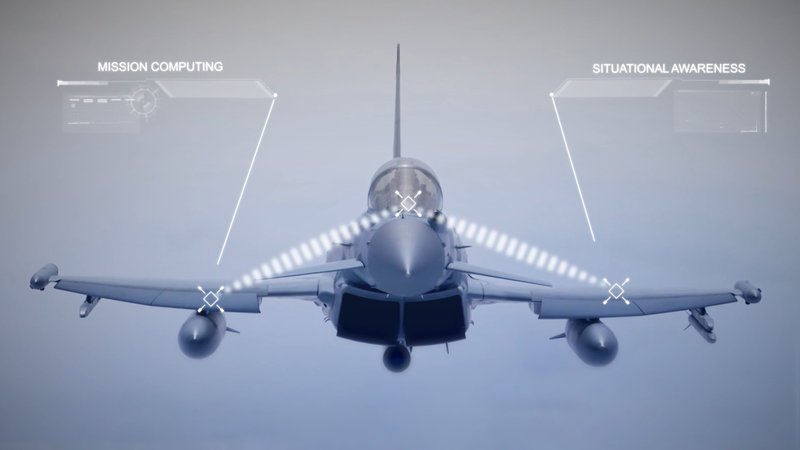
This is being driven by a surge in data, which Steggall identified as the second major trend impacting GDMS–UK today. The increase in information availability stems from the number of sensors now found on modern equipment and has a related impact on security, he explained, notably around data-at-rest demands.
Such data represents a significant resource for modern militaries, so must be exploited: “On the P-8A, for example, we're taking huge amounts of data off the aircraft and using software to pick out points of interest far quicker than you can do manually.”
The third technology trend is the increasing importance of uncrewed systems. Steggall pointed to the evolution of autonomous combat platforms that are designed to keep pace with fast jets and are tasked with executing missions independently. “That’s where you very much see demands for the types of mission systems that we’re familiar with,” he noted.
To meet these demands, GDMS–UK has taken its existing technologies and “made them smaller, lighter and ultimately more cost-effective for the uncrewed environment”, Steggall said. “You've got to think slightly differently in terms of the lifetime of the equipment and the environment it's going to be used in.”
The growing importance of autonomy is closely linked to the rapid evolution of artificial intelligence (AI). This is likely to become much more prevalent in software applications, he said, playing an important role amid the rise in data: “There's just so much information available – you need AI to help process it.”
“For us, it's all about setting up the base computing infrastructure to make sure it can handle that level of processing in the first place,” he added.
Rapid delivery
These evolving trends in the battlespace and defence industry can be seen in conflicts under way today, notably in Ukraine. There is a clear demand for continuous integration on military projects, for instance, with companies like GDMS–UK working closely with other elements of industry and the armed forces to ensure technology is always at the cutting edge.
The pace of delivery must also accelerate to keep up with demand, Steggall stressed. In Ukraine, for instance, “the amount of change in terms of technology going into use and almost being superseded very, very quickly, is having an impact all the way back through industry. What would have been a lengthy development programme in the past is becoming shorter and shorter.”
Building the agility to roll out technologies has been a key theme for GDMS–UK over the past two years, Steggall said, from prototype to production. The company has reaped the benefits of embracing open architectures in its systems, he added, in terms of both hardware and software.
“We can do rapid updates and adapt as technology moves on. Whether it's processing speed or storage capabilities, whatever it might be, we can drop it in very quickly. That gives the platforms the ability to move forward far quicker than we would have seen in the past.”
Ready for the future
GDMS–UK has invested in its Hastings facilities over the past two years, Steggall added, ensuring its sites are prepared to sustain rapid technological evolution. That investment is being matched by continued growth in the workforce, as the company expands its engineering, manufacturing and support teams.
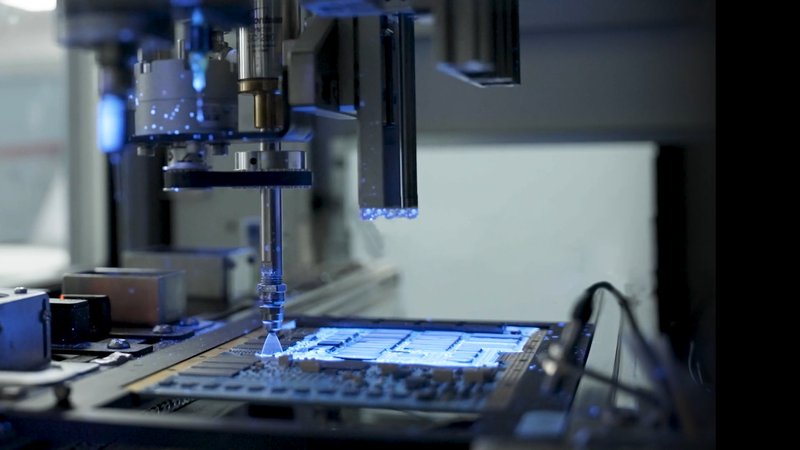
“We’ve seen a real influx of fantastic new talent,” he said. “People are joining us to work on genuinely cutting-edge technology, but also because they can build long-term careers here, working on programmes that matter and seeing their impact over many years.”
Looking to the future, the company will continue to build on the foundations of its longstanding domain knowledge and its investments of recent years, particularly in its core computing infrastructure, secure data-at-rest solutions and tactical data links, while developing the next generation of technologists to support those capabilities.
As the UK prepares for an unpredictable and constantly evolving security environment, Steggall believes his team are ready for the challenges ahead.
“We're well placed to support a range of different platforms, whether it’s fast jets, helicopters, surveillance aircraft or uncrewed systems,” he said. “The key is that the team is all based in the UK and we have our manufacturing and support base – we are ideally placed to support that sovereign air capability.”


More from Industry Spotlights
-
![The future is here: Sixth-gen air dominance]()
The future is here: Sixth-gen air dominance
How RTX is equipping the military airspace – for today’s fleet and tomorrow’s fight.
-
![De-Risking the Future: Manufacturing Certainty for Unmanned Systems]()
De-Risking the Future: Manufacturing Certainty for Unmanned Systems
How strategic manufacturing partnership solves the industrialisation triad — Scale, Compliance and Cost — for hyper-growth defence tech innovators.
-
![Battlefield mobility, made in the UK]()
Battlefield mobility, made in the UK
How does Britain ensure that we can preserve the lives of our soldiers and allies – now and in the future – with homegrown innovation and resilient domestic manufacturing? At Pearson Engineering, we are proud to be a central part of the answer to this increasingly important question.
-
![Strengthening Baltic defence capabilities]()
Strengthening Baltic defence capabilities
How Latvia is bolstering its territorial defences, industrial capacity and international cooperation with Dynamit Nobel Defence’s SKORPION2 Remote Mining System.
-
![Barco’s vision to trust: from past to future]()
Barco’s vision to trust: from past to future
Barco’s story is one of constant evolution enabling more immersive, reliable, and future-ready training experiences.
-
![How are next-generation ejection seats helping pilots when they need it most?]()
How are next-generation ejection seats helping pilots when they need it most?
The ACES 5 ejection seat from RTX’s Collins Aerospace introduces new, innovative and patented technologies to help save lives.