Strengthening Baltic defence capabilities
How Latvia is bolstering its territorial defences, industrial capacity and international cooperation with Dynamit Nobel Defence’s SKORPION2 Remote Mining System.


Enjoy free access to this sponsored article, all content provided by Dynamit Nobel Defence
Europe’s security landscape has changed considerably in recent years, prompting many nations, particularly those bordering Russia, to invest in advanced defensive technologies.
Against this background, Dynamit Nobel Defence GmbH (DND) has reached a significant milestone in its international engagement by signing a strategic contract with the Ministry of Defence of the Republic of Latvia and its National Defence Logistics and Procurement Centre.
The agreement covers the delivery of the SKORPION2Remote Mining System, marking both a major expansion of DND’s presence in the Baltic region and a substantial contribution to NATO’s eastern flank security. Latvia’s selection of SKORPION2 underscores its commitment to acquiring a modern, reliable and NATO-interoperable counter-mobility capability designed to meet operational and humanitarian standards.
Latvia’s decision to procure SKORPION2 aligns with its broader national and regional defence modernisation strategy, aimed at strengthening engineering capabilities and enhancing mobility-denial options. For DND, the contract demonstrates its ability to deliver complex systems built around technological innovation, operational flexibility and user-centred design.
“This contract is an important step for European defence cooperation”, said Michael Humbek, CEO of DND. “We are not only delivering an advanced system - we are also building a long-term partnership in industry and security.”
How the system meets Latvia’s needs
DND will supply the complete SKORPION2 system, including AT2+ antitank mines, technical training and logistical support, and intends to involve industrial partners on the Latvian side. The contract reflects Riga’s confidence in DND’s engineering expertise and Germany’s long-standing reputation for defence industry excellence.
Training provisions ensure Latvian personnel can fully operate, maintain and tactically employ the system, while local industrial involvement will strengthen national supply chain resilience and support long-term sustainment and future upgrades.
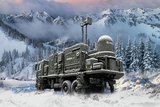
The SKORPION2 Remote Mining System represents state-of-the-art minelaying technology. Designed for rapid deployment and precision control, it enables forces to shape the battlefield while ensuring compliance with international conventions. Each platform can deploy patterns of AT2+ mines across a wide area, either in pre-planned defensive positions or dynamically in response to real-time developments.
The system integrates with digital command and control networks, allowing remote planning, activation and reporting. Core features include rapid deployment, programmable self-destruct and self-neutralisation mechanisms, modular integration options, NATO-standard interoperability, and reduced ownership costs through simplified maintenance.
Through these characteristics, SKORPION2modernises traditional minelaying, transforming it into a precise, flexible and responsible deterrence tool.
Latvia identified SKORPION2 as the optimal solution after a comprehensive evaluation, recognising its reliability, modularity and seamless digital integration. These qualities make it particularly well suited to Baltic terrain, where mobility, deterrence and interoperability with allies are essential. For Latvia, the system will significantly enhance the capabilities of its engineer troops, while for DND, the selection reinforces SKORPION2‘s growing international credibility among modern armed forces.
The importance of a collaborative approach
DND places strong emphasis on sustainable industrial cooperation with customer nations. As part of this contract, the company will work with Latvian industry through offset programmes and collaborative supply arrangements. “Local industrial participation is not just a contractual clause - it is a philosophy”, explained Jens Beimforde, Vice President for Business Development at DND.
The approach aims to support job creation, enable technology transfer and build long-term maintenance capabilities within Latvia, reflecting wider European procurement trends, where industrial resilience and sovereignty are considered as important as operational performance.
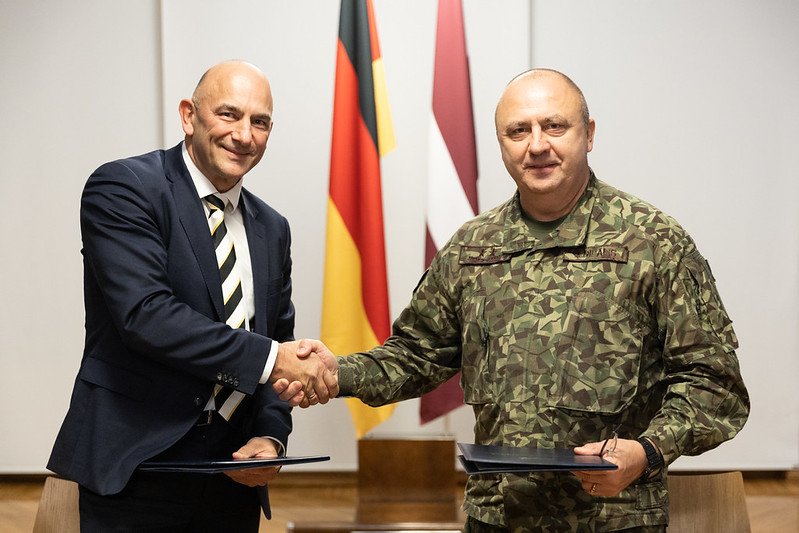
The agreement also has greater regional significance. Latvia is the first Baltic state to acquire modern minelaying capabilities and fully remote-controlled operation of deployed barriers, creating a model that others can follow.
The contract includes provisions for additional nations to join the procurement framework, underlining the system’s scalability and interoperability. This opens the possibility of a future multinational SKORPION2 user community, enabling shared training, logistics and operational best practice across allied forces.
The philosophy behind the development of SKORPION2is based on decades of experience in high-tech defence technology. The SKORPION2programme reflects close collaboration between engineers, soldiers and procurement authorities, ensuring operational needs are directly integrated into system design.
Manufacturing at the company’s site in Burbach adheres to strict quality and environmental standards, including ISO 9001 and ISO 14001 certifications, guaranteeing both reliability and sustainability.
A defining element of DND’s partnership approach is comprehensive lifecycle support. For Latvia, this extends far beyond the delivery of the equipment and includes training for operators and maintainers, mission-scenario simulations, technical integration support and lifecycle management services to ensure long-term readiness. This ensures that Latvian forces can operate and sustain the system independently for years to come.
Growing European capabilities within NATO
Within NATO’s broader deterrence posture, Latvia’s procurement of SKORPION2 provides an important operational enhancement. Its NATO-standard architecture facilitates seamless integration into multinational exercises and operations. DND will support these efforts through interoperability initiatives, training programmes and knowledge-exchange activities. As CEO Humbek stated: “We see this contract not as a one-off delivery, but as part of an ongoing partnership supporting peace, deterrence and preparedness.”
The Latvian contract forms a central component of DND’s long-term growth strategy. As European nations increase investment in defence readiness and industrial sovereignty, DND is positioned as a trusted partner for advanced land-system solutions.
Ongoing research and development in digitalisation, automation and modularity will ensure SKORPION2 remains at the forefront of next-generation battlefield-engineering capabilities. The Latvian contract also strengthens DND’s export credentials, providing a key reference for future engagements across NATO and partner states.

More from Industry Spotlights
-
![Orchestrating operational readiness across every defence domain]()
Orchestrating operational readiness across every defence domain
Are all systems ready for the next mission? Have upgrades been applied? Are all assets aligned to deploy together, on time and fully prepared? In modern defence operations, readiness is no longer measured platform by platform. It is measured by how well people, assets, data and decisions move together — across land, sea and air.
-
![Extending mission readiness: where XR adds real value in pilot, crew and maintenance training]()
Extending mission readiness: where XR adds real value in pilot, crew and maintenance training
Extended reality (XR) is becoming increasingly relevant in military aviation training, adding a flexible layer to an integrated ecosystem spanning the pilot, crew, and maintenance domains.
-
![Dominating the spectrum: ASELSAN’s EW capabilities take center stage at MSPO 2026]()
Dominating the spectrum: ASELSAN’s EW capabilities take center stage at MSPO 2026
ASELSAN is showcasing its advanced electronic warfare (EW) capabilities at MSPO 2026, highlighting technologies designed to detect, analyse, disrupt and deceive threats across increasingly contested electromagnetic environments.
-
![“Creating a decision advantage”: how C-UAS is evolving to reduce the operator burden]()
“Creating a decision advantage”: how C-UAS is evolving to reduce the operator burden
In Conversation… Speaking to Shephard’s Gerrard Cowan, Dr Brian Shand, Director – Advanced Concepts & Technology at L3Harris, explains how, as operators face growing numbers of low-cost drones, C-UAS providers must focus on reducing operator workload, transforming fragmented sensor data into effective decision-making.
-
![Shield the warfighter, win the fight (video)]()
Shield the warfighter, win the fight (video)
BAE Systems’ Intrepid Shield™ approach delivers full-spectrum electromagnetic protection to detect, exploit, and counter advanced threats.
-
![How joint ventures are expanding Rheinmetall's munitions portfolio (video)]()
How joint ventures are expanding Rheinmetall's munitions portfolio (video)
Roman Köhne, CEO of Rheinmetall's Weapon and Ammunition Division, discusses the company's announcements at Eurosatory 2026, including developments in defence technology, precision systems, industrial partnerships and future capability programmes.