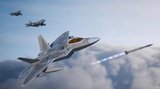
Bahrain to receive first batch of F-16Vs in 2024
Bahrain will receive a total of 16 aircraft with deliveries taking place in batches of four until 2025. (Photo: US DoD)
After a setback caused by the COVID-19 pandemic, the F-16V delivery programme is back on track for the Royal Bahraini Air Force and it will receive the first batch of fighter jets in early 2024.


The Royal Bahraini Air Force (RBAF) will receive its first batch of four F-16 Block 70 jets by the first half of 2024, RBAF Maj Gen Shaikh Hamid bin Abdullah Al Khalifah told reporters at the Manama Air Power Symposium 2022 (MAPS) on 9 November.
Bahrain will receive a total of 16 aircraft with deliveries taking place in batches of four until 2025.
Lockheed Martin received a $1.1 billion contract from the US DoD in 2018 to produce the Block 70 fighter jets for Bahrain, making the country the first customer to buy Lockheed Martin’s latest version of the F-16 design.
The jets will remain at a US-based Lockheed Martin facility where non-flying training activities will take place before they get shipped to Bahrain.
The production of the F-16Vs for Bahrain began in December 2019. The aircraft were meant to be delivered between 2022 and 2023 but disruptions caused by the COVID-19 pandemic have delayed the programme.
Lockheed Martin developed the F-16V as an advanced fighter alternative that could leverage its existing production infrastructure and global support network, targeted primarily at export customers.
According to the manufacturer, structural and capability upgrades ensure that the F-16 can fly and fight up to 2070 and beyond, which is 50% more than that of previous production F-16 aircraft.
Related Programmes in Defence Insight
Related Equipment in Defence Insight



More from Air Warfare
-
![The new generation of defence companies emerging from the US UAV boom]()
The new generation of defence companies emerging from the US UAV boom
As the Pentagon accelerates procurement of low-cost, lethal UAVs through its Drone Dominance Program, emerging suppliers will need to demonstrate manufacturing capacity, supply chain resilience and reliability.
-
![Sophistication versus simplification: the divided future of air-to-air missiles]()
Sophistication versus simplification: the divided future of air-to-air missiles
As global air combat operations continue to evolve at a rate not seen for decades, what will the next generation of air-to-air weapons look like, and what missions will they need to fulfil?
-
![AUSA 2026: New multiwarhead loitering munition enters increasingly competitive market]()
AUSA 2026: New multiwarhead loitering munition enters increasingly competitive market
Heaviside Industries has unveiled its new Tyr loitering munition at AUSA 2026 in Washington, DC, joining a growing field of manufacturers seeking to capitalise on billions of dollars in anticipated military spending.
-
![US military plans multi-UAV trials with Northrop Grumman quantum-navigated Lumberjack]()
US military plans multi-UAV trials with Northrop Grumman quantum-navigated Lumberjack
An undisclosed US military branch is preparing to evaluate multiple Lumberjack Group 3 drones equipped with SandboxAQ’s AQNav magnetic-navigation system. Shephard spoke with Northrop Grumman and SandboxAQ to find out more.