BAE Systems and Leonardo partner on aircraft survivability suite
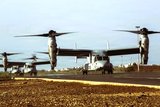
More than 3,000 BAE Systems AN/AAR-57 CMWS units have been installed on over 40 different types of aircraft. (Photo: US DoD)
The combined capability suite provided by BAE Systems and Leonardo UK will significantly enhance aircraft survivability against advanced threats.


BAE Systems and Leonardo UK have received US government approval to develop an interoperable aircraft survivability suite, the companies announced on 15 February.
The suite will combine BAE Systems’ AN/AAR-57 Common Missile Warning System (CMWS) and Leonardo’s Miysis directed infrared countermeasure (DIRCM) package, resulting in an enhanced aircraft survivability.
The AN/AAR-57 CMWS detects incoming hostile fire and missile threats, alerts crews, and automatically cues countermeasures. It is deployed across the US Army and allied nations’ rotary- and fixed-wing fleets.
More than 3,000 CMWS units have been installed on over 40 different types of aircraft and the system has logged more than four million combat flight hours.
Miysis provides dependable, persistent protection from IR man-portable air defence systems (MANPADs). It works by overwhelming a missile seeker head with a sudden stream of coded laser energy that can disable multiple threats simultaneously.
BAE Systems says this layered defence system will protect aircraft and their crews against new and advanced threats in the most complex battlespaces.
‘International customers who operate the AN/AAR-57 now have a fast, simple and low-risk way to equip their platforms with gold standard DIRCM protection against infrared missiles,’ Tony Innes, VP sales radar and advanced targeting at Leonardo, noted in a statement.
Related Equipment in Defence Insight

More from Air Warfare
-
![V-22 Osprey safety upgrade moves towards wider fleet installation under $35.5 million deal]()
V-22 Osprey safety upgrade moves towards wider fleet installation under $35.5 million deal
Bell Boeing will supply 73 additional ODSSHI kits as NAVAIR prepares to introduce predictive drive-system monitoring across US and Japanese V-22 fleets.
-
![AFA 2026: US Air Force examines uncrewed cargo aircraft for contested logistics]()
AFA 2026: US Air Force examines uncrewed cargo aircraft for contested logistics
The US Air Force is evaluating demonstrators for uncrewed cargo missions as it considers logistics requirements across the Pacific and other contested environments.
-
![Germany air focus: Europe’s leading near-term air market targets domestic industry]()
Germany air focus: Europe’s leading near-term air market targets domestic industry
Between 2026 and 2032, almost a quarter of EU aircraft spending is expected to come from Germany. While crewed programmes seek modernisation and replacement, uncrewed opportunities look to introduce entirely new capabilities, with both highlighting sovereignty and domestic production.
-
![Europe risks losing control of CUAS production capacity as manufacturers look abroad]()
Europe risks losing control of CUAS production capacity as manufacturers look abroad
European counter-drone developers are securing early orders in the Middle East while slow domestic acquisition processes threaten to redirect production capacity, expertise and investment away from Europe.