Elbit to support anti-missile systems for NATO A330 tanker fleet
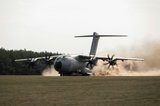
The NSPA-dedicated centre will also provide repair, spare parts and maintenance services. (Photo: NATO)
The NATO Support and Procurement Agency centre in Luxembourg will support the direct infrared countermeasures system fitted to the Multi-Role Tanker Transport Capability fleet.


Elbit Systems has signed a five-year in-service support contract with the NATO Support and Procurement Agency (NSPA) for the direct infrared countermeasures (DIRCM) systems fitted to the alliance’s A330 Multi-Role Tanker Transport Capability (MRTT-C) fleet.
The contract, announced on 24 January, includes establishing a service centre at NSPA to provide support and logistics for the system.
The DIRCM can protect larger military aircraft against attacks from infrared-guided missiles.
‘Demand for our DIRCM systems is growing due to increased threats posed to aircraft. We are proud to provide NATO with a logistics and service centre for local repair and maintenance of our systems,’ Oren Sabag, GM of Elbit Systems ISTAR & EW, noted in a statement.
The NSPA-dedicated facility, located in Luxembourg, will be an essential resource for the DIRCM-equipped A330 MRTT fleet, providing necessary expertise, equipment and maintenance, Elbit said.
The centre will also provide repair, spare parts and maintenance services.
Additionally, Elbit was awarded a follow-up contract from NSPA for an additional J-MUSIC system, part of the MUSIC DIRCM family.
The laser-based fully autonomous system is said to provide protection against advanced heat-seeking surface-to-air missiles.
Seven systems are already integrated, certified and operational on NATO MRTTs.
Related Programmes in Defence Insight
Related Equipment in Defence Insight

More from Air Warfare
-
![UK A400M Saudi deployment highlights airlifter’s role as Airbus pursues upgrades]()
UK A400M Saudi deployment highlights airlifter’s role as Airbus pursues upgrades
Airbus is developing new capabilities for its A400M transport aircraft as European countries consider future airlift requirements and the UK plans to deploy the aircraft to Saudi Arabia.
-
![The new generation of defence companies emerging from the US UAV boom]()
The new generation of defence companies emerging from the US UAV boom
As the Pentagon accelerates procurement of low-cost, lethal UAVs through its Drone Dominance Program, emerging suppliers will need to demonstrate manufacturing capacity, supply chain resilience and reliability.
-
![US Coast Guard faces key procurement decisions after C-130J and MQ-9B orders]()
US Coast Guard faces key procurement decisions after C-130J and MQ-9B orders
The service is updating several parts of its aviation fleet including fixed-wing and rotary-wing aircraft and procuring uncrewed aircraft to boost its maritime surveillance.