Airbus to position Eurofighter Typhoon for Portugal’s F-16 replacement requirement
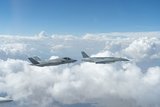
Portugal is looking to replace its ageing F-16 aircraft. (Photo: Portuguese Air Force)
The MoU with AED Cluster Portugal will see the two organisations work together on studies to create a pitch to replace the country’s current F-16 fleet.


Airbus has signed a memorandum of understanding with Portuguese Cluster for Aeronautics, Space and Defence Industries (AED Cluster Portugal) to look at cooperation opportunities, against the backdrop of Portugal’s F-16A/B fleet replacement requirement.
According to Airbus, the MoU will form a base in which to position the Eurofighter Typhoon as a “truly European” solution that could replace Portugal’s ageing F-16 fleet.
“In a time where European sovereignty and industrial autonomy is at the forefront of our strategy, Airbus strongly believes that the Eurofighter is the best option for this replacement,” said Jose Luis de Miguel, head of the European region
Our news & analysis is now part of Defence Insight®
A Basic-level or higher Defence Insight subscription is now required to view this content.


More from Air Warfare
-
![Quantum Systems details 480km/h Ukrainian interceptor as production scales up]()
Quantum Systems details 480km/h Ukrainian interceptor as production scales up
Quantum Systems’s Ukraine-made interceptor SPYS is thought to cost approximately 10 times less than Russia's jet-powered uncrewed aerial systems and is being produced at scale.
-
![UK eyes lightweight satellite communications for UAVs]()
UK eyes lightweight satellite communications for UAVs
The UK is seeking to extend the operational reach of uncrewed aerial vehicles, reflecting growing demand for compact, energy-efficient technology to support beyond-line-of-sight operations.
-
![UK A400M Saudi deployment highlights airlifter’s role as Airbus pursues upgrades]()
UK A400M Saudi deployment highlights airlifter’s role as Airbus pursues upgrades
Airbus is developing new capabilities for its A400M transport aircraft as European countries consider future airlift requirements and the UK plans to deploy the aircraft to Saudi Arabia.