USCG commissions Oliver Berry in Hawaii


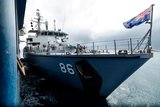
The US Coast Guard (USCG) has commissioned Hawaii’s first Sentinel-class cutter, Oliver Berry, into service at its base in Honolulu, US Pacific Command announced on 2 November.
Oliver Berry is the first of three Honolulu-based fast response cutters (FRC) that will primarily serve the main Hawaiian Islands.
The USCG is acquiring 58 FRCs to replace its 110ft Island-class patrol boats. The 154ft FRCs are designed for missions including search and rescue, ports, waterways and coastal security, drug and migrant interdiction and fisheries patrols.
The ships feature advanced C4ISR equipment, and have the ability to launch and recover standardised small boats from the stern.
The USCG took delivery of Oliver Berry on 27 June in Key West. Three FRCs are expected to be stationed at Base Honolulu by the spring of 2019.
Related Equipment in Defence Insight

You may also like
More from Naval Warfare
-
![Suppliers await next step in Australia’s mine warfare transition]()
Suppliers await next step in Australia’s mine warfare transition
Australia’s mine countermeasure capability remains in flux as the Huon-class nears retirement, but accelerated investment in autonomous systems is opening a path for industry.
-
![Can the US Navy ask Indo-Pacific allies to do more while training with them less?]()
Can the US Navy ask Indo-Pacific allies to do more while training with them less?
As the Iran War draws US ships and marine corps units away from the Indo-Pacific, curtailed exercises and a temporary carrier gap are exposing tensions between Washington’s demand for more self-reliant allies and the joint training needed to realise that ambition.
-
![How could Rheinmetall’s GMF 140 fit with ongoing programmes in North America?]()
How could Rheinmetall’s GMF 140 fit with ongoing programmes in North America?
With Canada committed to its River-class replacement and the USN pursuing a lower-cost frigate, Rheinmetall will need to demonstrate where the GMF 140 can fill a capability gap in the North American fleet.
-
![Australian industry programme builds pipeline for Virginia-class sustainment]()
Australian industry programme builds pipeline for Virginia-class sustainment
Australian businesses can now bid to support Virginia-class submarine sustainment in Western Australia, as momentum around the Henderson Defence Precinct also builds.
-
![South Korea, Japan and Turkey vie for US shipbuilding access in future frigate contest]()
South Korea, Japan and Turkey vie for US shipbuilding access in future frigate contest
Washington’s search for a foreign-built frigate could hand South Korea, Japan and Turkey a larger prize than a double-hull order: a foothold inside the US shipbuilding industrial base.