US Navy’s AN/AQS-20C completes developmental testing


The US Navy’s AN/AQS-20C mine-hunting sonar system completed developmental testing at the US Naval Surface Warfare Center, Panama City Division (NSWC PCD), on 26 February 2019.
The AQS-20C is the next generation of the AN/AQS-20 system designed to be incorporated into the navy’s Littoral Combat Ship Mine Countermeasures (MCM) Mission Package.
During testing, the Raytheon-developed towed sonar sensor conducted 12 underway missions in various operational modes and at different depths at four separate NSWC PCD test ranges. The missions were conducted aboard the test vessel M/V Patriot. Developmental testing of the system validates that its design meets all technical specifications.
The sonar system consists of four sonar arrays: two side-looking arrays; a gap-filler sonar array; and a forward-looking sonar array providing simultaneous detection, localisation and classification of bottom mines, close-tethered moored mines and volume-moored mines. It delivers high-definition images of bottom mines, providing the operator with both range and contrast data that combine to form 3D image during post-mission analysis.
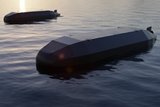
The AQS-20C will now be integrated with and deployed from the MCM USV, a long-endurance, semi-autonomous, diesel-powered, all-aluminium surface vessel that supports the employment of various MCM payloads.
The MCM USV can be launched and recovered by the LCS to provide minesweeping, mine-hunting and mine neutralisation capabilities. The MCM USV is currently undergoing developmental testing as a component of the Unmanned Influence Sweep System at the South Florida Test Facility in Fort Lauderdale, Florida.
Test results will now undergo scoring and performance assessment leading up to a final developmental testing report that is expected to be completed in the spring of 2019.


More from Naval Warfare
-
![RTX confirms US Marine Corps and US Navy acquire Hadalus UUV]()
RTX confirms US Marine Corps and US Navy acquire Hadalus UUV
RTX told Shephard that the Hadalus UUV has been procured by the US Marine Corps and the Office of Naval Research for operational experimentation as the company prepares additional demonstrations with the US Navy, NATO and AUKUS partners.
-
![Europe’s naval contractors benefit from growing refit and upgrade demand]()
Europe’s naval contractors benefit from growing refit and upgrade demand
Rheinmetall’s order to modernise the German Navy frigate Bayern points to a wider European shift towards extending warship service life as new-build programmes face delay.
-
![The UK joins the movement towards joint procurement]()
The UK joins the movement towards joint procurement
The UK will spend an estimated US$3.89 billion over the next decade in joint naval programmes, a lot of which will be in cooperation with Norway.
-
![Rheinmetall’s GMF 140: Ambitious frigate or market misfit?]()
Rheinmetall’s GMF 140: Ambitious frigate or market misfit?
Rheinmetall has unveiled its first next-generation frigate design, showing ambitions to compete as a surface combatant prime contractor. While the company is targeting North America, analysts believe the concept may be better positioned for future European programmes.