AN/AQS-20A sonar set for improvements


Raytheon and the US Naval Undersea Warfare Center (NUWC) are working to improve the capabilities of the US Navy’s AN/AQS-20A minehunting sonar, the company announced on 27 August.
Under a ‘work for private party’ contract funded by Raytheon, the team is analysing the AN/AQS-20A’s synthetic aperture sonar to improve its ability to capture and process high- and low-resolution images of underwater mines.
The enhancements will enable the sonar to produce better quality images of objects found deep under water to aid in the identification and classification of mines. A series of lab- and sea-based tests will be carried out to evaluate and exercise the sonar’s features to optimise the quality of both high- and low-resolution imaging.
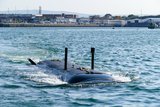
The AN/AQS-20A is the variable depth sonar for the AN/WLD-1 Remote Minehunting System (RMS) deployed from the navy’s Littoral Combat Ship (LCS). The system is towed undersea to simultaneously scan the water column for anti-shipping mines forward of, to the sides, and beneath the vehicle. Sophisticated sonar, electro-optical sensors, and high-precision location information are used to provide high-resolution images of mines and mine-like objects.
Kevin Peppe, vice president of Raytheon Integrated Defense Systems’ Seapower Capability Systems, said: ‘Extending our long history of collaboration with our NUWC neighbours, this project brings together our respective sonar experts to maximise the performance of a critical undersea warfare capability. Our goal is to build on the system’s proven performance and further the advantage that AN/AQS-20A provides to the navy to safely detect and effectively identify these undersea threats.’

You may also like
More from Naval Warfare
-
![Quantum sensing gathers pace as navies eye undersea advantage]()
Quantum sensing gathers pace as navies eye undersea advantage
As AI dominates defence conversations, industry increasingly points to quantum sensing as the technology set to change submarine and uncrewed underwater vehicle operations.
-
![Competitive P17B tender marks a shift in Indian Navy frigate procurement]()
Competitive P17B tender marks a shift in Indian Navy frigate procurement
The Indian Navy's P17B programme is expected to combine greater weapons capacity with a competitive domestic construction model, although key systems could remain dependent on international supply chains.
-
![How France’s SNLE 3G programme is reshaping the naval nuclear industrial base]()
How France’s SNLE 3G programme is reshaping the naval nuclear industrial base
Extending far beyond a four-submarine replacement programme, France’s ballistic missile submarine effort is a decades-long industrial initiative designed to preserve the country’s ability to build and sustain nuclear-powered strategic platforms.
-
![China’s mineral processing dominance exposes naval supply chain vulnerabilities]()
China’s mineral processing dominance exposes naval supply chain vulnerabilities
Competition for critical minerals, and China’s dominance of their processing, is emerging as a decisive factor in future naval procurement programmes.
-
![Suppliers await next step in Australia’s mine warfare transition]()
Suppliers await next step in Australia’s mine warfare transition
Australia’s mine countermeasure capability remains in flux as the Huon-class nears retirement, but accelerated investment in autonomous systems is opening a path for industry.