US Navy seeks help to fix submarine support network problems
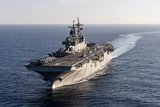
The USN has problems getting its SSNs through their maintenance cycles. Lack of sufficient parts and shipyard capacity means fewer boats are getting to sea. (Photo: USN)
The US Navy has released a Request for Information (RFI) to gather information about developing capabilities to support its submarine programmes.


A spokesperson from the US Navy told Shephard that the RFI ‘seeks information on targeted submarine new construction and sustainment efforts, specifically evaluating for capacity and manufacturing, or reverse engineering capabilities to support the navy’s submarine programmes’.
The spokesperson explained that the RFI is looking for capabilities to ‘refurbish or produce low-volume parts for new construction on an as-needed or/and ongoing basis; provide reverse engineering support for obsolete components; [and] manufacture and/or overhaul targeted submarine components’.
The RFI was published by the Blue Forge Alliance (BFA), the navy’s non-profit integrator for the submarine industrial base, in August and it is
Our news & analysis is now part of Defence Insight®
A Basic-level or higher Defence Insight subscription is now required to view this content.



More from Naval Warfare
-
![Competitive P17B tender marks a shift in Indian Navy frigate procurement]()
Competitive P17B tender marks a shift in Indian Navy frigate procurement
The Indian Navy's P17B programme is expected to combine greater weapons capacity with a competitive domestic construction model, although key systems could remain dependent on international supply chains.
-
![Quantum Systems enters maritime domain with Baltic-focused USV and UUV]()
Quantum Systems enters maritime domain with Baltic-focused USV and UUV
Quantum Systems has launched into the maritime domain with Seavex and Subvex, aiming to close a Baltic Sea ISR gap opened by infrastructure sabotage.
-
![Suppliers await next step in Australia’s mine warfare transition]()
Suppliers await next step in Australia’s mine warfare transition
Australia’s mine countermeasure capability remains in flux as the Huon-class nears retirement, but accelerated investment in autonomous systems is opening a path for industry.
-
![Can the US Navy ask Indo-Pacific allies to do more while training with them less?]()
Can the US Navy ask Indo-Pacific allies to do more while training with them less?
As the Iran War draws US ships and marine corps units away from the Indo-Pacific, curtailed exercises and a temporary carrier gap are exposing tensions between Washington’s demand for more self-reliant allies and the joint training needed to realise that ambition.