TKMS hands over second Egyptian MEKO frigate
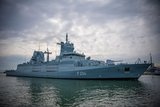
Egypt is procuring four MEKO A-200 EN frigates from TKMS. (Photo: TKMS)
German shipbuilder ThyssenKrupp Marine Systems (TKMS) has handed over the second of four MEKO A-200 EN frigates to the Egyptian Navy.


During a 26 May ceremony at Bremerhaven, Germany, the ship was named Al-Qahhar and accepted by the Egyptian Navy.
Under the programme, three MEKO A-200 EN frigates are being built in Germany, and the fourth ship will be built locally at Egypt’s Alexandria Shipyard.
Work on Al-Qahhar began in December 2019, with the keel laid in March 2020. The vessel was then later launched in August 2021.
Related Articles
Every picture tells a story as Egyptian Navy frigate obtains Italian EW upgrade
Euronaval 2022: Egypt formally receives first MEKO A-200 and names second
Keel laid for Brazil’s MEKO-based Tamandaré frigate
The third ship of the programme will be handed over by TKMS later this year.
Commander in Chief of the Egyptian Navy, VAdm Ashraf Ibrahim Atwa, said: ‘This project is considered a role model for many countries in the field of joint military industrialisation,’
‘Today, with the delivery of the ‘Al-Qahhar‘ frigate, our project has reached its midway.’
The vessels have been ordered to replace the ageing US Oliver Hazard Perry-class frigates, which comprise the bulk of the Egyptian Navy’s escort fleet.
Related Programmes in Defence Insight
Related Equipment in Defence Insight



More from Naval Warfare
-
![Russia’s uncrewed boat portfolio hints at future naval demand]()
Russia’s uncrewed boat portfolio hints at future naval demand
Ukrainian intelligence has catalogued more than 20 Russian uncrewed surface vessels, revealing a portfolio weighted towards mine warfare and logistics, with implications for Western naval investment.
-
![Ukraine’s new long-range 12m autonomous vessel can deploy other drones]()
Ukraine’s new long-range 12m autonomous vessel can deploy other drones
Ukraine’s UForce unveiled the MV11 uncrewed surface vessel, designed to launch and support other naval drones at sea, fuelling debate over the future of autonomous maritime task groups.
-
![Global submarine suppliers compete for a rapidly shrinking market]()
Global submarine suppliers compete for a rapidly shrinking market
Diminishing submarine competitions worldwide are leaving fewer acquisition opportunities, pushing contractors toward alternatives.