New UK-Norway pact covers warship, missile and autonomous system collaboration
The UK and Norway will share a fleet of 13 Type 26 frigates, potentially using crew interchangeably. (Photo: BAE Systems)
The Lunna House Agreement represents multiple opportunities for cooperation between the two navies, and follows on from last year’s declaration of a joint strategic partnership between the countries.


The UK and Norway have further enhanced their shared operational capabilities this week as the two countries entered an agreement aimed at protecting North Atlantic infrastructure and bolstering shared maritime defences in light of increasing Russian activity in the area.
The Lunna House Agreement, signed by UK Defence Secretary John Healey and his Norwegian counterpart Tore O Sandvik on 4 December 2025, covers several aspects on which the UK Royal Navy (RN) and the Norwegian Royal Navy (NRN) will work together on operations as well as the development of advanced equipment.
It follows on from a commitment made by the two countries last year to work together “to promote [their] common interests”. Under 2024’s Joint Declaration on the Norwegian-UK Strategic Partnership, the pair declared their intent to deepen the bilateral defence cooperation across all domains and to invest in unique, strategic cooperation in the High North and the North Atlantic.
Related Articles
BAE Systems selected for multi-billion-dollar Norway ship order
UK MoD’s confirmation of MBDA missile for Type 26 points to more European collaboration
The 2024 agreement stated: “We will ensure this is underpinned by structures that promote even greater interoperability between our armed forces, a shared understanding of threats, and joint capability development” – pre-empting this week’s new deal.
Commenting on the joint operation agreement this week, Healey said: “In this new era of threat and with increasing Russian activity in the North Atlantic, our strength comes from hard power and strong alliances. When our critical infrastructure and waters are threatened, we step up.
“For over 75 years, the UK and Norway have stood shoulder-to-shoulder on NATO’s northern flank, defending Europe and keeping our people safe. This partnership takes us further, making our nations more secure at home and strong abroad.
“Through this Lunna House Agreement, we will patrol the North Atlantic as one, train together in the Arctic, and develop the advanced equipment that will keep our citizens safe now and into the future. We are stepping up on European security and delivering on our NATO-first plan.”
Sharing Type 26 anti-submarine frigates
One major part of the deal involves the two navies sharing a fleet of 13 BAE Systems Type 26 frigates. Norway announced its selection of the British-made Type 26 anti-submarine frigate under a £10 billion (US$13.5 billion) deal for five ships at the end of August 2025, while the UK Navy is to receive eight ships.
When the frigate deal was announced, the countries highlighted the benefits of operating a single type in a combined force in the far North Atlantic Ocean, allowing the navies to operate “seamlessly”, as noted by Sandvik. Norway’s order consisted of ships that would be identical to the UK’s once built, including technical specifications and weapon systems, with the option to use Norwegian and British crew interchangeably.
The frigates will patrol the “strategically vital gap between Greenland, Iceland and the UK, monitoring Russian naval activity and defending critical infrastructure such as underwater cables and pipelines, which carry vital communications, electricity and gas”, said the UK Ministry of Defence.
The vessels will have a displacement of 6,900t, measuring 149.9m in length with a beam of 20.8m, according to Shephard Defence Insight, with the unit cost for construction alone being estimated at £1.59 billion each.
Royal Navy to adopt Norway’s Naval Strike Missile
The agreement between the UK and Norway also covers the RN’s adoption of Norway’s Naval Strike Missile (NSM). The subsonic, sea-skimming, anti-ship and land-attack missile is already in service with the NRN, along with other international fleets including Denmark, Spain, Australia and the US.
In 2022, the UK announced it had selected the NSM as an “interim replacement” for the Harpoon Block 1C missile, with the missiles to be integrated with the RN’s Type 23 Duke-class frigates and Type 45 destroyers.
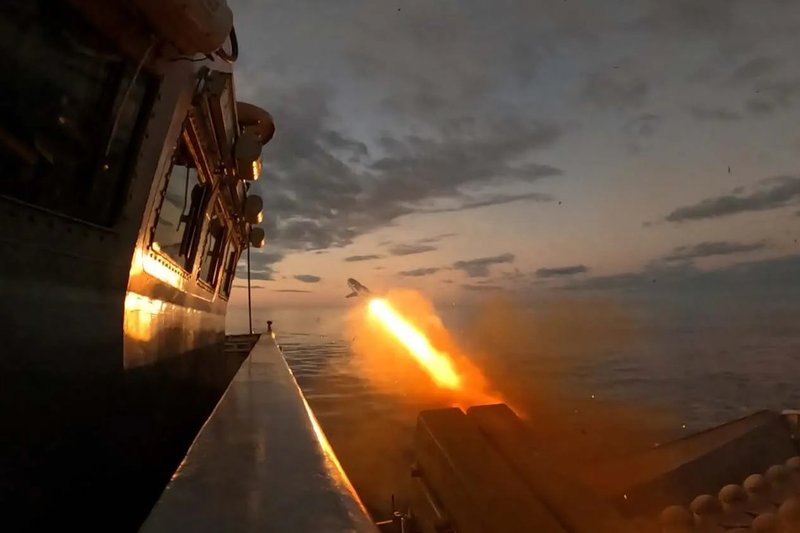
In September 2025, the RN successfully completed its first firing of the NSM from its HMS Somerset Type 23 frigate as part of a NATO exercise carried out in Norwegian seas, alongside both Norwegian and Polish units. Hailed a more lethal weapon for the forces, the anti-ship and land-attack missile is designed to strike heavily defended land and sea targets, with a range of more than 100 miles. It can travel at speeds of up to Mach 1.
Global demand for the NSM has been on the rise, with contracts being signed this year by Malaysia and Denmark, while Kongsberg Defence Australia announced in March that it would set up its first factory producing NSMs outside of Norway at Newcastle Airport, Australia.
Deeper collaboration on Sting Ray torpedoes
The UK and Norway have also announced that the agreement will see “deeper collaboration on Sting Ray torpedoes, helping to boost munitions stockpiles”.
The Sting Ray Mod 1 is the torpedo currently used on the RN’s Type 23 frigates and maritime patrol aircraft affiliated with the Royal Air Force. In September last year, the UK Defence Equipment and Support (DE&S) awarded a £60.1 million contract to BAE Systems for the assessment phase of the Sting Ray Mid Life Upgrade (SRMLU), aimed at upgrading from Mod 1 to Mod 2 of the light torpedo.
According to DE&S, this will involve a four-year assessment phase covering the design and development of the upgrade, the build of prototype weapons and the implementation of an in-water trial.
Leading NATO’s adoption of autonomous systems
As autonomous and uncrewed capabilities remain at the forefront of maritime innovation across global forces, the UK and Norway have pledged to lead the way in NATO’s adoption of autonomous systems in the High North.
In 2022, NATO revealed its autonomy implementation plan, aimed at the alliance and its allies harnessing autonomous systems to support core tasks and better defend against novel threats. The alliance has also set up Task Force X which aims to leverage the latest autonomous naval technology and artificial intelligence (AI) to counter emerging threats.
Both the UK and Norway have moved towards advancing their autonomous and uncrewed technologies. In recent months, the RN has displayed a clear focus on becoming a “hybrid navy”, including successfully testing its remotely operated Rattler boats in October. It also announced “Project Beehive” in November, setting out the RN’s requirement for “a fleet of 20 uncrewed surface vessels” (USVs) for its surface flotilla.
A key part of this transformation, which also involves Norway, is linked to the new Type 26 frigates being supplied to both countries. As part of the Atlantic Bastion concept, uncrewed escorts will operate alongside the new ships, carrying out independent operations with the ability to find, track and act against adversaries. A launcher can also be provided for fixed-wing uncrewed aerial vehicles.
Related Programmes in Defence Insight
Global Combat Ship Programme - Batch 1 - City Class (Type 26) [UK]
Fridtjof Nansen Frigates Replacement (1-5) [Norway]
Related Equipment in Defence Insight



More from Naval Warfare
-
![How France’s SNLE 3G programme is reshaping the naval nuclear industrial base]()
How France’s SNLE 3G programme is reshaping the naval nuclear industrial base
Extending far beyond a four-submarine replacement programme, France’s ballistic missile submarine effort is a decades-long industrial effort designed to preserve the country’s ability to build and sustain nuclear-powered strategic platforms.
-
![China’s mineral processing dominance exposes naval supply chain vulnerabilities]()
China’s mineral processing dominance exposes naval supply chain vulnerabilities
Competition for critical minerals, and China’s dominance of their processing, is emerging as a decisive factor in future naval procurement programmes.
-
![Suppliers await next step in Australia’s mine warfare transition]()
Suppliers await next step in Australia’s mine warfare transition
Australia’s mine countermeasure capability remains in flux as the Huon-class nears retirement, but accelerated investment in autonomous systems is opening a path for industry.
-
![Can the US Navy ask Indo-Pacific allies to do more while training with them less?]()
Can the US Navy ask Indo-Pacific allies to do more while training with them less?
As the Iran War draws US ships and marine corps units away from the Indo-Pacific, curtailed exercises and a temporary carrier gap are exposing tensions between Washington’s demand for more self-reliant allies and the joint training needed to realise that ambition.
-
![How could Rheinmetall’s GMF 140 fit with ongoing programmes in North America?]()
How could Rheinmetall’s GMF 140 fit with ongoing programmes in North America?
With Canada committed to its River-class replacement and the USN pursuing a lower-cost frigate, Rheinmetall will need to demonstrate where the GMF 140 can fill a capability gap in the North American fleet.