What new technologies could be involved in UK Atlantic Bastion initiative?
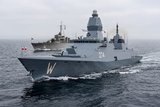
The Royal Navy has made significant progress on uncrewed vessels this year, including its testing of five Syos Aerospace Rattler vessels earlier this year which were controlled from 500 miles away. (Photo: Royal Navy)
As new details emerge on the UK Royal Navy’s plan to secure the North Atlantic for the UK and NATO, three main areas of opportunity for new technology are the focal point.


The UK Ministry of Defence (MoD) has revealed more information this week on the UK Royal Navy’s (RN) Atlantic Bastion initiative as part of the country’s response to the growing threat of submarine and underwater activity from Russia.
Atlantic Bastion was outlined in the government’s Strategic Defence Review (SDR) 2025 published earlier this year, highlighting the RN’s role in protecting critical undersea infrastructure and maritime traffic while defending the Euro-Atlantic as part of its contribution to NATO’s regional defence plans.
In a bid to reflect the changing needs of maritime defence, as Russia continues to modernise its own capabilities at a
Our news & analysis is now part of Defence Insight®
A Basic-level or higher Defence Insight subscription is now required to view this content.




More from Naval Warfare
-
![All eyes on Royal Navy’s Type 93 market engagement as industry prepares bids]()
All eyes on Royal Navy’s Type 93 market engagement as industry prepares bids
Responses are due by 29 October as the Royal Navy tests the market, with BAE Systems’ Herne and MSubs’ Excalibur setting up a contest where payloads may decide the winner.
-
![US Navy’s MQ-25 Stingray approaches carrier-integration tests]()
US Navy’s MQ-25 Stingray approaches carrier-integration tests
Boeing has outlined its upcoming precision-landing and carrier-airspace trials as MQ-25 manufacturing shifts towards Illinois, with initial Lot 1 deliveries expected in 2029.
-
![From Poland to the Pacific: can Miecznik become a blueprint for other navies?]()
From Poland to the Pacific: can Miecznik become a blueprint for other navies?
Babcock is taking its Polish industrial partnership approach to Denmark and New Zealand as navies seek sovereign shipbuilding skills alongside ships.