UK to join US Navy’s Virginia-class submarine assembly effort to speed up construction
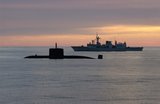
The Virginia-class SSNs are fitted with the latest sensors and weapons to assist in sea control, land attack, electronic warfare and special operations. (Photo: John Narewski/US Navy)
The expansion of the Virginia-class submarine construction to UK shores could accelerate the project as US shipbuilders continue to fall short of delivery goals.


A contract to complete specific work on the US Navy’s Virginia-class nuclear-powered attack submarines has been outsourced for the first time to Babcock International in the UK, allowing the company to build complex submarine assemblies at its Rosyth shipyard in Scotland.
Babcock and Huntington Ingalls Industries (HII) announced on 9 December they had signed a contract to expand their strategic partnership to support construction of the submarines and “increase throughput at HII’s Newport News Shipbuilding (NNS) division”. HII currently builds the submarines at NNS alongside General Dynamics Electric Boat (GDEB), which carries out some of the work at its Groton, Connecticut site.
The contract is expected to
Our news & analysis is now part of Defence Insight®
A Basic-level or higher Defence Insight subscription is now required to view this content.



More from Naval Warfare
-
![Euronaval 2026: Red Cat’s Blue Ops follows USV demand from Asia to the Andes]()
Euronaval 2026: Red Cat’s Blue Ops follows USV demand from Asia to the Andes
With its B-26 USV in full-rate production, Blue Ops is seeking to turn overseas interest into orders through a combination of lower operating costs, UAV integration and local manufacturing.
-
![Euronaval 2026: Baltic breakthrough powers Saildrone’s next European expansion]()
Euronaval 2026: Baltic breakthrough powers Saildrone’s next European expansion
Denmark’s doubled deployment, Mediterranean smuggling routes and Norwegian composite hulls show where uncrewed surveillance demand is heading, while British funding remains unclear.
-
![From Chokepoints to the Deep: ASELSAN’s Naval Vision at EURONAVAL]()
From Chokepoints to the Deep: ASELSAN’s Naval Vision at EURONAVAL
From deployable ship defence to autonomous sea and underwater vehicles, ASELSAN is preparing for a new era of naval security.
-
![Euronaval 2026: by the power of six, Fincantieri’s MMMV reflects modular naval shift]()
Euronaval 2026: by the power of six, Fincantieri’s MMMV reflects modular naval shift
The 50m, six-person ship from the Italian shipbuilder carries swappable, containerised payloads instead of a fixed mission, reflecting a shift that is becoming increasingly evident.