


Australian industry programme builds pipeline for Virginia-class sustainment
Australian businesses can now bid to support Virginia-class submarine sustainment in Western Australia, as momentum around the Henderson Defence Precinct also builds.


Germany’s F126 frigates will be fitted with Systematic’s maritime C2 solution. (Image: Damen Naval)
Danish company Systematic Defence will be rolling an advanced version of its SitaWare Maritime C2 solution onto the German Navy’s newest generation of frigate, the F126, thereby extending its presence from existing platforms into the newest generation.
As part of a contract with DXC Technology Deutschland GmbH, Systematic will supply the ships with the National Maritime C2 Service Bundeswehr (NMC2S Bw).
SitaWare Headquarters has already been in use by the Bundeswehr – the German armed forces – and has been called the Mission Enabling Service Bundeswehr (MESBw).
The new contract will provide additional functionality, via SitaWare Maritime and SitaWare Fusion, culminating in an enhanced maritime C2 system.
Systematic Defence developed SitaWare Naval based on its land-domain counterpart, the SitaWare Headquarters. Similar to other SitaWare products, it adheres to an open, modular systems architecture.
On 1 August 2023, Shephard reported that Systematic was awarded a contract to deliver new SitaWare Maritime Headquarters, Maritime and Fusion software packages to Germany under the country’s BAAINBw German Mission Network Block 2 (GMN 2) project.
Systematic has previously stated that Denmark, Ireland and the UK were customer of the Systematic Maritime system.


Australian businesses can now bid to support Virginia-class submarine sustainment in Western Australia, as momentum around the Henderson Defence Precinct also builds.
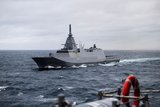
Washington’s search for a foreign-built frigate could hand South Korea, Japan and Turkey a larger prize than a double-hull order: a foothold inside the US shipbuilding industrial base.

Japan’s FY2027 defence budget backs stand-off strike, a 17-aircraft MQ-9B buy and a declared bid to lead the world in uncrewed maritime assets, alongside new frigates, submarines and support ships.
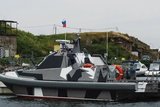
Ukrainian intelligence has catalogued more than 20 Russian uncrewed surface vessels, revealing a portfolio weighted towards mine warfare and logistics, with implications for Western naval investment.
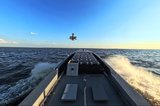
Ukraine’s UForce unveiled the MV11 uncrewed surface vessel, designed to launch and support other naval drones at sea, fuelling debate over the future of autonomous maritime task groups.
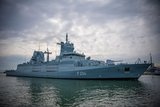
The test-firing of an Israel Aerospace Industries LORA ballistic missile from a German vessel highlights the Bundeswehr’s focus on speed to capability as it trials Israel’s operationally proven technology.

Connect with us on socials


