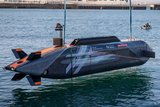
RN fires Switchblade 300 from autonomous Madfox
The RN’s autonomous MADFOX vessel fired the Switchblade 300 during two weeks of NATO exercises in Portugal. (Photo: MoD/ Crown Copyright)
The RN launched Switchblade 300 from the Madfox autonomous platform for the first time.


The RN has launched an AeroVironment Switchblade 300 Tactical Missile System from its autonomous Madfox boat during the REPMUS 2021 NATO exercise in Portugal.
The missile firing occurred during a two-week exercise in September 2021 to test the integration of NATO systems and explore existing and new military roles for autonomy.
A Puma drone launched from USNS Carson City relayed target information to a land-based control centre for the firing. Madfox then received the target information and fired the missile.
Experts from the RN NavyX autonomous systems research division deployed to Portugal for the exercise.
NavyX Experimentation Team Leader Cdr Antony Crabb said:
Our news & analysis is now part of Defence Insight®
A Basic-level or higher Defence Insight subscription is now required to view this content.




More from Naval Warfare
-
![France’s naval modernisation drives opportunities for European defence industry]()
France’s naval modernisation drives opportunities for European defence industry
Ahead of Euronaval 2026, major submarine, frigate and aircraft carrier programmes are driving investment, while future corvette replacements and growing interest in uncrewed vessels offer further opportunities for industry into the 2030s and beyond.
-
![Canada assesses security equipment changes for Polar Icebreaker Imnaryuaq]()
Canada assesses security equipment changes for Polar Icebreaker Imnaryuaq
The Canadian Department of National Defence is evaluating communications and reconnaissance changes for CCGS Imnaryuaq’s expanded maritime security role, while retaining its 2032 acceptance target.
-
![All eyes on Royal Navy’s Type 93 market engagement as industry prepares bids]()
All eyes on Royal Navy’s Type 93 market engagement as industry prepares bids
Responses are due by 29 October as the Royal Navy tests the market, with BAE Systems’ Herne and MSubs’ Excalibur setting up a contest where payloads may decide the winner.
-
![US Navy’s MQ-25 Stingray approaches carrier-integration tests]()
US Navy’s MQ-25 Stingray approaches carrier-integration tests
Boeing has outlined its upcoming precision-landing and carrier-airspace trials as MQ-25 manufacturing shifts towards Illinois, with initial Lot 1 deliveries expected in 2029.