RFA Argus heads for Baltic Protector 2019


RFA Argus has deployed for Baltic Protector 2019 with Royal Marine helicopter squadrons embarked as part of a Royal Navy amphibious task force.
The deployment, led by flagship HMS Albion, is the first test of the RN-led international Joint Expeditionary Force. With the British amphibious task group at its heart, it also consists of ships, aircraft, helicopter, troops and armour from up to eight other allied nations that have shorelines on either the Baltic or North Seas.
Onboard Argus are the Royal Marines’ Commando Helicopter Force and Merlin Mk4 troop carriers (845 Naval Air Squadron), and reconnaissance/intelligence gathering Wildcats (847 NAS).
As well as conducting exercises and providing training support both for the Fleet Air Arm and military medics, Argus doubles up as a casualty treatment ship with onboard hospital facilities
Related Equipment in Defence Insight


More from Naval Warfare
-
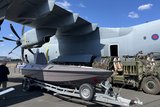
![A400M trial demonstrates airborne deployment of uncrewed surface vessel]()
A400M trial demonstrates airborne deployment of uncrewed surface vessel
Kraken Technology Group’s A400M airdrop of a K3 Scout uncrewed surface vessel points to a new way for navies to insert USVs into contested waters, bypassing ports and motherships.
-
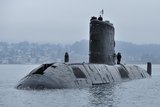
![Babcock onshores 85% of Canada’s submarine supply chain as it eyes future CPSP programme]()
Babcock onshores 85% of Canada’s submarine supply chain as it eyes future CPSP programme
By moving most of the Royal Canadian Navy’s submarine supply chain into Canada, Babcock Canada is driving to strengthen sovereign sustainment capabilities while preparing to compete to maintain the future Canadian Patrol Submarine Project.
-
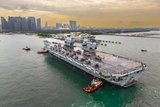
![From the seas to the web: the changing shape of UK defence in Southeast Asia]()
From the seas to the web: the changing shape of UK defence in Southeast Asia
As his final engagement before leaving his post as the head of the British defence staff for Southeast Asia and defence adviser to Singapore, Brigadier Eddie Maskell-Pedersen spoke with Shephard about maritime security, cyber cooperation and long-term partnerships.
-
![Naval primes dive into an underwater acquisition gold rush]()
Naval primes dive into an underwater acquisition gold rush
A cluster of acquisitions by Fincantieri, Thales, Lockheed Martin and Rheinmetall points to a race to secure underwater warfare, autonomy and sensing capability.
-
![Baltic naval priorities shift towards mine warfare and versatile platforms]()
Baltic naval priorities shift towards mine warfare and versatile platforms
Baltic states are investing in mine warfare, uncrewed systems and multirole platforms as major warship purchases remain scarce, industry sources indicate.