Philippines commissions final Parola-class boats


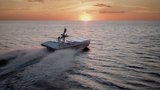
The Philippine Coast Guard (PCG) commissioned its final two Parola-class Multi-Role Response Vessels (MRRV) in the Manila port area on 23 August, completing a full fleet of ten boats of the type.
The final two 44.5m boats were BRP Bagacay (pennant number 4410) and BRP Cape Engaño (4411). Like their sister ships, they are named after lighthouses dotted around the Philippines.
The former had arrived in the Philippines on 31 May, while the latter reached the country on 20 August.
At the commissioning ceremony, the PCG commented: ‘Under the project terms, the MRRVs will be the primary rescue
Our news & analysis is now part of Defence Insight®
A Basic-level or higher Defence Insight subscription is now required to view this content.



More from Naval Warfare
-
![Euronaval 2026: Red Cat’s Blue Ops follows USV demand from Asia to the Andes]()
Euronaval 2026: Red Cat’s Blue Ops follows USV demand from Asia to the Andes
With its B-26 USV in full-rate production, Blue Ops is seeking to turn overseas interest into orders through a combination of lower operating costs, UAV integration and local manufacturing.
-
![Euronaval 2026: ‘I want to sell 31 Type 31s by 2031’ - CGO maps Babcock’s global push]()
Euronaval 2026: ‘I want to sell 31 Type 31s by 2031’ - CGO maps Babcock’s global push
Chief growth officer Sir Nick Hine tells Shephard how Babcock is lining up New Zealand, Chile, Denmark and the US for its Arrowhead 140 frigate, speaks on the hybrid navy offer and talks AUKUS.
-
![From Chokepoints to the Deep: ASELSAN’s Naval Vision at EURONAVAL]()
From Chokepoints to the Deep: ASELSAN’s Naval Vision at EURONAVAL
From deployable ship defence to autonomous sea and underwater vehicles, ASELSAN is preparing for a new era of naval security.
-
![Euronaval 2026: by the power of six, Fincantieri’s MMMV reflects modular naval shift]()
Euronaval 2026: by the power of six, Fincantieri’s MMMV reflects modular naval shift
The 50m, six-person ship from the Italian shipbuilder carries swappable, containerised payloads instead of a fixed mission, reflecting a shift that is becoming increasingly evident.
-
![Canada’s submarine availability under pressure as Chicoutimi is unlikely to return to front-line duties]()
Canada’s submarine availability under pressure as Chicoutimi is unlikely to return to front-line duties
HMCS Victoria and HMCS Windsor could return from their current deep maintenance, but unconfirmed operational timelines leave questions over patrol capacity before the first CPSP arrives.