New Zealand selects Sea Ceptor for ANZAC frigates


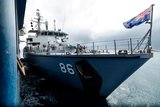
The New Zealand government has officially confirmed the selection of the MBDA Sea Ceptor for the Royal New Zealand Navy’s ANZAC Frigate Systems Upgrade (FSU) project, with the contract for the provision of the system signed on 21 May.
Sea Ceptor will equip the ANZAC frigates as the Local Area Air Defence element of the FSU project, bringing the vessels the ability to protect the host ship as well as combined joint allied forces in the vicinity.
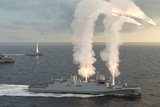
Sea Ceptor is an active radar system that does not require the dedicated tracker/illuminator radars on which semi-active systems depend. Sea Ceptor deploys the Common Anti-air Modular Missile (CAMM) which, due to its soft launch technology, requires no efflux management system. This minimises the system’s mass and footprint thereby allowing for greater flexibility regarding ship installation positions.
Steve Wadey, managing director and group executive director technical, MBDA UK, said: ‘I am delighted that New Zealand has confirmed its selection of Sea Ceptor for the ANZAC FSU project. This first success in the global market outside the UK for Sea Ceptor is due not only to its advanced operational and through-life cost advantages, but also to the invaluable support provided by the UK government and the Royal Navy during discussions with the New Zealand Ministry of Defence.
‘Cooperation between the governments and the navies of the UK and New Zealand will continue to be important to delivering an excellent Sea Ceptor capability throughout the life of the project.’



More from Naval Warfare
-
![Suppliers await next step in Australia’s mine warfare transition]()
Suppliers await next step in Australia’s mine warfare transition
Australia’s mine countermeasure capability remains in flux as the Huon-class nears retirement, but accelerated investment in autonomous systems is opening a path for industry.
-
![Can the US Navy ask Indo-Pacific allies to do more while training with them less?]()
Can the US Navy ask Indo-Pacific allies to do more while training with them less?
As the Iran War draws US ships and marine corps units away from the Indo-Pacific, curtailed exercises and a temporary carrier gap are exposing tensions between Washington’s demand for more self-reliant allies and the joint training needed to realise that ambition.
-
![How could Rheinmetall’s GMF 140 fit with ongoing programmes in North America?]()
How could Rheinmetall’s GMF 140 fit with ongoing programmes in North America?
With Canada committed to its River-class replacement and the USN pursuing a lower-cost frigate, Rheinmetall will need to demonstrate where the GMF 140 can fill a capability gap in the North American fleet.
-
![Australian industry programme builds pipeline for Virginia-class sustainment]()
Australian industry programme builds pipeline for Virginia-class sustainment
Australian businesses can now bid to support Virginia-class submarine sustainment in Western Australia, as momentum around the Henderson Defence Precinct also builds.
-
![South Korea, Japan and Turkey vie for US shipbuilding access in future frigate contest]()
South Korea, Japan and Turkey vie for US shipbuilding access in future frigate contest
Washington’s search for a foreign-built frigate could hand South Korea, Japan and Turkey a larger prize than a double-hull order: a foothold inside the US shipbuilding industrial base.