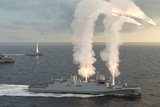
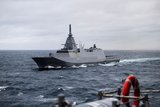
Australian frigate risk reduction studies signed
The Australian government has signed an agreement with Navantia for the Risk Reduction and Design Study (RRDS) Phase for the Department of Defence’s (DoD’s) SEA 5000 Future Frigate programme, the company announced on 29 August.
The government has entered into similar agreements with BAE Systems and Fincantieri. The agreements come under the DoD’s Competitive Evaluation Process (CEP) for the programme.
According to Navantia, the agreement will see the company engage in processes for approximately one year that will allow the DoD to assess the risk, capability and other matters associated with Navantia’s proposed ship design.
Back in April 2016 the government granted first pass approval for the Future Frigates. Three designers – BAE Systems with the Type 26 Frigate; Fincantieri with the FREMM Frigate, and Navantia with a redesigned F100 – were short-listed to refine their designs. The frigates will all be built in Adelaide, incorporating the Australian-developed CEA Phased-Array Radar.
The CEP is scheduled to return second pass approval in 2018, which will allow for construction to commence in Adelaide in 2020. The programme is estimated to be worth more than $35 billion.



You may also like
More from Naval Warfare
-
![Suppliers await next step in Australia’s mine warfare transition]()
Suppliers await next step in Australia’s mine warfare transition
Australia’s mine countermeasure capability remains in flux as the Huon-class nears retirement, but accelerated investment in autonomous systems is opening a path for industry.
-
![Can the US Navy ask Indo-Pacific allies to do more while training with them less?]()
Can the US Navy ask Indo-Pacific allies to do more while training with them less?
As the Iran War draws US ships and marine corps units away from the Indo-Pacific, curtailed exercises and a temporary carrier gap are exposing tensions between Washington’s demand for more self-reliant allies and the joint training needed to realise that ambition.
-
![How could Rheinmetall’s GMF 140 fit with ongoing programmes in North America?]()
How could Rheinmetall’s GMF 140 fit with ongoing programmes in North America?
With Canada committed to its River-class replacement and the USN pursuing a lower-cost frigate, Rheinmetall will need to demonstrate where the GMF 140 can fill a capability gap in the North American fleet.
-
![Australian industry programme builds pipeline for Virginia-class sustainment]()
Australian industry programme builds pipeline for Virginia-class sustainment
Australian businesses can now bid to support Virginia-class submarine sustainment in Western Australia, as momentum around the Henderson Defence Precinct also builds.
-
![South Korea, Japan and Turkey vie for US shipbuilding access in future frigate contest]()
South Korea, Japan and Turkey vie for US shipbuilding access in future frigate contest
Washington’s search for a foreign-built frigate could hand South Korea, Japan and Turkey a larger prize than a double-hull order: a foothold inside the US shipbuilding industrial base.