Kraken adds mini-torpedo capability to K50 fast boat
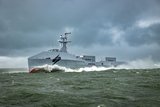
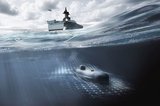
The Black Scorpion mini-torpedo system will be integrated with the K50 Kraken fast boat platform, (Photo: KTG)
Kraken has signed a partnership agreement with Leonardo with the first project involving integration of the Black Scorpion torpedo onto the K50 platform.


UK maritime systems specialist Kraken Technology Group (KTG) has announced a partnership agreement with Leonardo, starting with the integration of the latter’s Black Scorpion mini-torpedo system onto the K50 Kraken platform to enhance sub-surface domain capability.
The collaboration envisages integration of a broader range of Leonardo systems into future KTG platforms, including Lionfish to provide defence and ASuW capability.
The K50 Kraken is described a maritime precision engagement fast-boat platform, designed to provide swarmed-strike response to littoral threats.
Related Articles
Turks hail swarming landmark as USV work diversifies
M134D adds firepower to Kraken craft
The Black Scorpion torpedo is designed to facilitate engagement of sub-surface threats in challenging operational scenarios, while Lionfish is Leonardo’s lightweight compact family of small-calibre naval turrets, available in 12.7mm and 20mm versions.
Mal Crease, founder and CEO of KTG, commented: ‘Teaming with Leonardo and integrating their market-leading defence systems will unlock yet another dimension in Kraken’s ability to effectively counter multi-domain threats above and below surface.’

More from Naval Warfare
-
![Competitive P17B tender marks a shift in Indian Navy frigate procurement]()
Competitive P17B tender marks a shift in Indian Navy frigate procurement
The Indian Navy's P17B programme is expected to combine greater weapons capacity with a competitive domestic construction model, although key systems could remain dependent on international supply chains.
-
![How France’s SNLE 3G programme is reshaping the naval nuclear industrial base]()
How France’s SNLE 3G programme is reshaping the naval nuclear industrial base
Extending far beyond a four-submarine replacement programme, France’s ballistic missile submarine effort is a decades-long industrial initiative designed to preserve the country’s ability to build and sustain nuclear-powered strategic platforms.
-
![China’s mineral processing dominance exposes naval supply chain vulnerabilities]()
China’s mineral processing dominance exposes naval supply chain vulnerabilities
Competition for critical minerals, and China’s dominance of their processing, is emerging as a decisive factor in future naval procurement programmes.
-
![Suppliers await next step in Australia’s mine warfare transition]()
Suppliers await next step in Australia’s mine warfare transition
Australia’s mine countermeasure capability remains in flux as the Huon-class nears retirement, but accelerated investment in autonomous systems is opening a path for industry.
-
![Can the US Navy ask Indo-Pacific allies to do more while training with them less?]()
Can the US Navy ask Indo-Pacific allies to do more while training with them less?
As the Iran War draws US ships and marine corps units away from the Indo-Pacific, curtailed exercises and a temporary carrier gap are exposing tensions between Washington’s demand for more self-reliant allies and the joint training needed to realise that ambition.