Dutch Navy turns to Lionfish
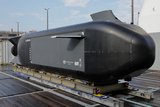
Illustration of the Lionfish Top weapon system. (Photo: Leonardo)
The non-deck penetrating Lionfish Top from Leonardo will equip various Royal Netherlands Navy vessels.


The Royal Netherlands Navy has selected Leonardo’s Lionfish family of systems to equip its Holland-class OPVs, Johan De Witt LPD, Karel Doorman support ship, and planned Den Helder-class Combat Support Ship.
The ships will be equipped with the Lionfish Top variant, one of three 12.7mm systems within the Lionfish family of remote-controlled naval turrets.
Lionfish Top utilises a cooled IR sensor integrating the company’s Mini Colibrì optics. The system can also incorporate an uncooled sensor.
Along with other Lionfish variants, the system can self-calculate firing solutions and engage fast-moving threats.
According to Leonardo, the system is particularly effective against close threats.
The Lionfish Top selection builds on the relationship between the Royal Netherlands Navy and Leonardo, with the prior previously selecting the company’s OTO 127/64 LW Vulcano systems for its De Zeven Provinciën-class frigates.

More from Naval Warfare
-
![US turns to allies to tackle navy shipbuilding backlog]()
US turns to allies to tackle navy shipbuilding backlog
A White House memorandum acknowledges US Navy shipbuilding backlogs and a weakened industrial base, opening a formal path for South Korean and Japanese yards to help rebuild capacity.
-
![US Navy’s $275 billion BBGN plan hinges on shipyard transformation]()
US Navy’s $275 billion BBGN plan hinges on shipyard transformation
The US Navy’s planned nuclear-powered warship carries a US$275 billion price tag, but the greater story lies in the industrial overhaul needed to build it, from AI-enabled design to digital twins and modular construction.
-
![Industry sees opportunity in Australia’s shift to networked undersea warfare]()
Industry sees opportunity in Australia’s shift to networked undersea warfare
Australia’s new defence innovation strategy indicates a shift from platform-centric to network-centric undersea warfare, with Ocius and Anduril Industries pointing to fast-growing opportunities for local industry.
-
![Asia-Pacific emerges as the largest export market for US-made USVs]()
Asia-Pacific emerges as the largest export market for US-made USVs
Asian customers have placed one of the largest known international purchases of US-built uncrewed surface vessels, highlighting accelerating regional demand for autonomous maritime capabilities and distributed naval operations.