UK ‘Hybrid Navy’ steps up as Norway cooperation reinforces Arctic strategy
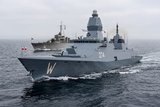
The UK and Norway will operate a combined fleet of Type 26 frigates to support anti-submarine warfare efforts. (Photo: BAE Systems)
As Russia commits billions to new warships and stealth submarines, the UK is reshaping its strategy with expanded troop deployments, shared frigate fleets and a shift towards uncrewed platforms.


The UK is pushing ahead with its transformation into a ‘Hybrid Navy’ to maintain an operational advantage over Russian threats, alongside bolstering its cooperation with Norway in the Atlantic as part of the ongoing Russian deterrence effort in the GIUK gap and Arctic approaches.
The Hybrid Navy concept, under the First Sea Lord’s Warfighting Ready Plan 2029, involves the modernisation of the UK Royal Navy’s (RN) operational capabilities with a focus on crewed, uncrewed and autonomous vessels to combat modern threats, including infrastructure sabotage, missiles and submarines. The idea is to create a more agile, responsive force using a combination
Our news & analysis is now part of Defence Insight®
A Basic-level or higher Defence Insight subscription is now required to view this content.




More from Naval Warfare
-
![All eyes on Royal Navy’s Type 93 market engagement as industry prepares bids]()
All eyes on Royal Navy’s Type 93 market engagement as industry prepares bids
Responses are due by 29 October as the Royal Navy tests the market, with BAE Systems’ Herne and MSubs’ Excalibur setting up a contest where payloads may decide the winner.
-
![US Navy’s MQ-25 Stingray approaches carrier-integration tests]()
US Navy’s MQ-25 Stingray approaches carrier-integration tests
Boeing has outlined its upcoming precision-landing and carrier-airspace trials as MQ-25 manufacturing shifts towards Illinois, with initial Lot 1 deliveries expected in 2029.
-
![From Poland to the Pacific: can Miecznik become a blueprint for other navies?]()
From Poland to the Pacific: can Miecznik become a blueprint for other navies?
Babcock is taking its Polish industrial partnership approach to Denmark and New Zealand as navies seek sovereign shipbuilding skills alongside ships.