


FNSS looks to put uncrewed vehicles at the front of amphibious assaults
The new platform is designed to put reconnaissance, obstacle clearance and fire support ahead of the crewed force in a contested landing.


The new 3SM Tyrfing will be an improved version of the NSM. (Image: Kongsberg)
The Norwegian government has launched a programme to develop a next-generation naval strike missile in cooperation with Kongsberg and Germany which will be designed to compliment the existing Naval Strike Missile (NSM).
The new missile will be known as SuperSonic Strike Missile (3SM) Tyrfing, a magic sword from Norse mythology, and has been scheduled to be ready in 2035.
Norwegian defence minister Bjørn Arild Gram said: ‘The project will continue to extend [Kongsberg’s] strategically important expertise, so we can continue to develop missiles that are attractive to other NATO countries and close allies.’
The Norwegian government has proposed to initiate and complete the initial design phase of the project, before returning to the Norwegian Parliament with a recommendation to continue the project.
The NSM will be a subsonic, sea-skimming, terrain-following anti-ship and land-attack long-range precision missile designed to strike heavily defended land and sea targets.
Kongsberg has received several recent orders for the NSM in the past 12 months including for Polish coastal defence systems (CDS), the UK Royal Navy’s Darling-class Type 45 destroyers and Romania expected to receive its first CDS with NSMs in 2024.

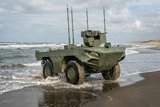
The new platform is designed to put reconnaissance, obstacle clearance and fire support ahead of the crewed force in a contested landing.
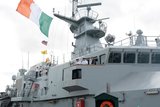
Around 75% of the northern hemisphere’s undersea cables transit Irish waters, but personnel shortfalls and a stalled multirole vessel programme leave patrol capacity in question.

A White House memorandum acknowledges US Navy shipbuilding backlogs and a weakened industrial base, opening a formal path for South Korean and Japanese yards to help rebuild capacity.
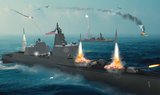
The US Navy’s planned nuclear-powered warship carries a US$275 billion price tag, but the greater story lies in the industrial overhaul needed to build it, from AI-enabled design to digital twins and modular construction.
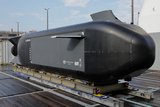
Australia’s new defence innovation strategy indicates a shift from platform-centric to network-centric undersea warfare, with Ocius and Anduril Industries pointing to fast-growing opportunities for local industry.

Asian customers have placed one of the largest known international purchases of US-built uncrewed surface vessels, highlighting accelerating regional demand for autonomous maritime capabilities and distributed naval operations.

Connect with us on socials


