Japan commissions first Taigei-class submarine
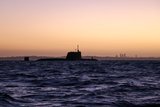
The JMSDF has welcomed into service its first-of-class submarine JS Taigei. It was built by Mitsubishi Heavy Industries. (JMSDF)
Japan’s navy has now reached its full complement of 22 conventional submarines.


The first-of-class submarine JS Taigei was commissioned into the Japan Maritime Self-Defense Force (JMSDF) on 9 March.
With the JMSDF planning to increase its number of operational submarines from 16 to 22, this commissioning brings the submarine fleet up to its full number for the first time.
Taigei-class submarines are equipped with lithium-ion batteries, and the snorkel electricity generator system is developed to maximise the characteristics of these batteries that can continuously discharge large currents. This system includes a diesel engine with high output, and the ability to cope with rapid load changes.
The submarine possesses a floating deck
Our news & analysis is now part of Defence Insight®
A Basic-level or higher Defence Insight subscription is now required to view this content.



More from Naval Warfare
-
![Suppliers await next step in Australia’s mine warfare transition]()
Suppliers await next step in Australia’s mine warfare transition
Australia’s mine countermeasure capability remains in flux as the Huon-class nears retirement, but accelerated investment in autonomous systems is opening a path for industry.
-
![Can the US Navy ask Indo-Pacific allies to do more while training with them less?]()
Can the US Navy ask Indo-Pacific allies to do more while training with them less?
As the Iran War draws US ships and marine corps units away from the Indo-Pacific, curtailed exercises and a temporary carrier gap are exposing tensions between Washington’s demand for more self-reliant allies and the joint training needed to realise that ambition.
-
![How could Rheinmetall’s GMF 140 fit with ongoing programmes in North America?]()
How could Rheinmetall’s GMF 140 fit with ongoing programmes in North America?
With Canada committed to its River-class replacement and the USN pursuing a lower-cost frigate, Rheinmetall will need to demonstrate where the GMF 140 can fill a capability gap in the North American fleet.
-
![Australian industry programme builds pipeline for Virginia-class sustainment]()
Australian industry programme builds pipeline for Virginia-class sustainment
Australian businesses can now bid to support Virginia-class submarine sustainment in Western Australia, as momentum around the Henderson Defence Precinct also builds.
-
![South Korea, Japan and Turkey vie for US shipbuilding access in future frigate contest]()
South Korea, Japan and Turkey vie for US shipbuilding access in future frigate contest
Washington’s search for a foreign-built frigate could hand South Korea, Japan and Turkey a larger prize than a double-hull order: a foothold inside the US shipbuilding industrial base.