HMS Cattistock completes SNMCG1 operations


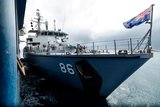
The Royal Navy’s HMS Cattistock has completed its deployment with Standing NATO Mine Countermeasures Group 1 (SNMCG1), returning to HM Naval Base Portsmouth on 23 November.
The seven-week deployment saw the Hunt-class minesweeper carry out a mix of defence and security assurance missions in the Baltic, along with the clearance of anti-shipping mines laid during the two World Wars.
Cattistock operated alongside assets from the Danish, Belgian, German, Latvian, Norwegian and Dutch navies, neutralising a total of 39 mines in Irbe Strait.
After a stop in Copenhagen, the Portsmouth-based warship joined SNMCG1 in Tallinn, Estonia. It also visited Finland and Latvia before heading back.
Related Equipment in Defence Insight




More from Naval Warfare
-
![How France’s SNLE 3G programme is reshaping the naval nuclear industrial base]()
How France’s SNLE 3G programme is reshaping the naval nuclear industrial base
Extending far beyond a four-submarine replacement programme, France’s ballistic missile submarine effort is a decades-long industrial effort designed to preserve the country’s ability to build and sustain nuclear-powered strategic platforms.
-
![Quantum Systems enters maritime domain with Baltic-focused USV and UUV]()
Quantum Systems enters maritime domain with Baltic-focused USV and UUV
Quantum Systems has launched into the maritime domain with Seavex and Subvex, aiming to close a Baltic Sea ISR gap opened by infrastructure sabotage.
-
![Suppliers await next step in Australia’s mine warfare transition]()
Suppliers await next step in Australia’s mine warfare transition
Australia’s mine countermeasure capability remains in flux as the Huon-class nears retirement, but accelerated investment in autonomous systems is opening a path for industry.
-
![Can the US Navy ask Indo-Pacific allies to do more while training with them less?]()
Can the US Navy ask Indo-Pacific allies to do more while training with them less?
As the Iran War draws US ships and marine corps units away from the Indo-Pacific, curtailed exercises and a temporary carrier gap are exposing tensions between Washington’s demand for more self-reliant allies and the joint training needed to realise that ambition.
-
![How could Rheinmetall’s GMF 140 fit with ongoing programmes in North America?]()
How could Rheinmetall’s GMF 140 fit with ongoing programmes in North America?
With Canada committed to its River-class replacement and the USN pursuing a lower-cost frigate, Rheinmetall will need to demonstrate where the GMF 140 can fill a capability gap in the North American fleet.