G3 Systems delivers bespoke Fire Trials & Evaluation Unit for Royal Navy
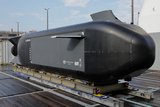
The FTEU is a modular design that integrates with the floor of the facility, requiring minimal changes to infrastructure while incorporating safety and functional improvements. (Photo: G3 Systems)
G3 Systems has successfully delivered a specially designed Fire Trials and Evaluation Unit (FTEU) to the Royal Navy (RN) at Horsea Island. The FTEU enables realistic firefighting simulation and equipment analysis.


The FTEU offers the navy a platform to conduct live fire testing and equipment analysis, enabling realistic simulation of fire behaviour aboard RN vessels.
Navy Command Headquarters, Defence Equipment & Support, the Submarine Delivery Agency, equipment teams, and platform authorities will be able to use this facility, as it provides data and experiences that inform equipment selection and development of firefighting policies, procedures, and techniques.
Trials are conducted in a controlled environment, verifying effectiveness before they become official policies.
Related Articles
G3 Systems reveals progress on NavyPODS
GA-ASI gears up to trial Mojave UAV from a Royal Navy aircraft carrier
French nuclear sub Perle returns to action after fire damage
G3 Systems has previously developed other modular deployable containerized solutions for the RN, including Forward Support Units and NavyPODs for heavy lift drone capabilities.
The FTEU is a modular design that integrates with the floor of the facility, requiring minimal changes to infrastructure while incorporating safety and functional improvements.
The burn unit can be operated by a minimum of two personnel, with the flexibility to accommodate up to five personnel equipped with full firefighting gear and breathing apparatus at any given time.

More from Naval Warfare
-
![Industry sees opportunity in Australia’s shift to networked undersea warfare]()
Industry sees opportunity in Australia’s shift to networked undersea warfare
Australia’s new defence innovation strategy indicates a shift from platform-centric to network-centric undersea warfare, with Ocius and Anduril Industries pointing to fast-growing opportunities for local industry.
-
![Asia-Pacific emerges as the largest export market for US-made USVs]()
Asia-Pacific emerges as the largest export market for US-made USVs
Asian customers have placed one of the largest known international purchases of US-built uncrewed surface vessels, highlighting accelerating regional demand for autonomous maritime capabilities and distributed naval operations.
-
![RTX confirms US Marine Corps and US Navy acquire Hadalus UUV]()
RTX confirms US Marine Corps and US Navy acquire Hadalus UUV
RTX told Shephard that the Hadalus UUV has been procured by the US Marine Corps and the Office of Naval Research for operational experimentation as the company prepares additional demonstrations with the US Navy, NATO and AUKUS partners.