Canada, Japan deepen defence ties in face of Chinese threats
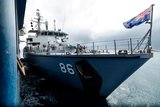
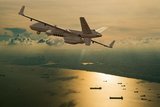
HMCS Vancouver takes part in an international deployment to the Indo-Pacific in September. (Photo: USN)
The Canadian and Japanese governments are working towards an intelligence-sharing partnership, while Ottawa has pledged to deploy more naval vessels to the region.


In October 2022, Japanese Foreign Minister Yoshimasa Hayashi and his Canadian counterpart Melanie Joly agreed to formally begin talks towards signature of a military intelligence-sharing agreement as part of a joint action plan for a ‘free and open’ Indo-Pacific region.
At a bilateral meeting in Tokyo, the two sides stated their intentions to reach an accord ‘as soon as possible’ to increase cooperation between their armed forces and ease sharing of intelligence under a General Security of Information Agreement.
This type of pact entails direct distribution of information between Japan and Canada (rather than through third-party or partner nations) about
Our news & analysis is now part of Defence Insight®
A Basic-level or higher Defence Insight subscription is now required to view this content.


More from Naval Warfare
-
![Suppliers await next step in Australia’s mine warfare transition]()
Suppliers await next step in Australia’s mine warfare transition
Australia’s mine countermeasure capability remains in flux as the Huon-class nears retirement, but accelerated investment in autonomous systems is opening a path for industry.
-
![Can the US Navy ask Indo-Pacific allies to do more while training with them less?]()
Can the US Navy ask Indo-Pacific allies to do more while training with them less?
As the Iran War draws US ships and marine corps units away from the Indo-Pacific, curtailed exercises and a temporary carrier gap are exposing tensions between Washington’s demand for more self-reliant allies and the joint training needed to realise that ambition.
-
![How could Rheinmetall’s GMF 140 fit with ongoing programmes in North America?]()
How could Rheinmetall’s GMF 140 fit with ongoing programmes in North America?
With Canada committed to its River-class replacement and the USN pursuing a lower-cost frigate, Rheinmetall will need to demonstrate where the GMF 140 can fill a capability gap in the North American fleet.
-
![Australian industry programme builds pipeline for Virginia-class sustainment]()
Australian industry programme builds pipeline for Virginia-class sustainment
Australian businesses can now bid to support Virginia-class submarine sustainment in Western Australia, as momentum around the Henderson Defence Precinct also builds.
-
![South Korea, Japan and Turkey vie for US shipbuilding access in future frigate contest]()
South Korea, Japan and Turkey vie for US shipbuilding access in future frigate contest
Washington’s search for a foreign-built frigate could hand South Korea, Japan and Turkey a larger prize than a double-hull order: a foothold inside the US shipbuilding industrial base.
-
![Japan’s FY2027 budget bets on stand-off systems to offset demographic decline]()
Japan’s FY2027 budget bets on stand-off systems to offset demographic decline
Japan’s FY2027 defence budget backs stand-off strike, a 17-aircraft MQ-9B buy and a declared bid to lead the world in uncrewed maritime assets, alongside new frigates, submarines and support ships.