Brazilian Navy selects MBDA’s Sea Ceptor


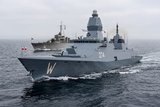
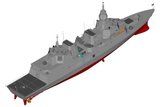
MBDA’s Sea Ceptor has marked a new success, with the system selected for integration onto the Brazilian Navy’s Tamandaré class corvettes. MBDA announced the news on 28 November.
Sea Ceptor will provide local area air defence for the next-generation Tamandaré class corvettes. The system provides all-weather, night and day, 360° local area air defence coverage against multiple simultaneous targets including sea-skimming anti-ship missiles, helicopters and fast combat jets. The weapon is also capable of engaging surface targets.
Sea Ceptor has now been selected by three navies. The UK Ministry of Defence selected the system in September 2013 for its Type 23 frigates and Type 26 Global Combat Ships; and the Royal New Zealand Navy selected Sea Ceptor for its ANZAC Frigate Systems Upgrade (FSU) project in May 2014.
Sea Ceptor’s soft launch technology removes the need for a launcher efflux management system, thereby reducing overall mass and onboard footprint characteristics. This allows greater flexibility for the customer in choosing the weapon’s installation position, a particularly important feature for smaller vessels. It also allows for easy installation as a retrofit on older ships.


More from Naval Warfare
-
![US Navy’s MQ-25 Stingray approaches carrier-integration tests]()
US Navy’s MQ-25 Stingray approaches carrier-integration tests
Boeing has outlined its upcoming precision-landing and carrier-airspace trials as MQ-25 manufacturing shifts towards Illinois, with initial Lot 1 deliveries expected in 2029.
-
![From Poland to the Pacific: can Miecznik become a blueprint for other navies?]()
From Poland to the Pacific: can Miecznik become a blueprint for other navies?
Babcock is taking its Polish industrial partnership approach to Denmark and New Zealand as navies seek sovereign shipbuilding skills alongside ships.
-
![Aevex, Lockheed Martin and Thales deals highlight consolidation in naval technology]()
Aevex, Lockheed Martin and Thales deals highlight consolidation in naval technology
A wave of acquisitions is bringing specialist autonomy and underwater technology under the umbrella of larger defence contractors. As a result, navies may gain faster access to capability, but not necessarily a broader choice of suppliers.
-
![Italy’s DDX destroyer deal opens a decade of naval spending]()
Italy’s DDX destroyer deal opens a decade of naval spending
A €3.7 billion destroyer contract for Fincantieri and Leonardo is only the start, with submarines, corvettes and a new carrier pointing to more opportunities.