Australia releases Pacific Patrol Boat RfT


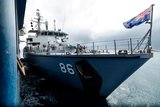
The Australian Department of Defence has released a Request for Tender (RFT) for Australian-made replacements for its Pacific Patrol Boats under the Pacific Maritime Security Program, Project SEA3036 Phase 1.
The project, worth $594 million, will see up to 21 steel-hulled replacement patrol vessels constructed in-country as a central aspect of the Australian government’s continued commitment to maritime security in the Pacific region.
The DoD’s existing Pacific Patrol Boats are approaching their end of service life, and new vessels will assist Pacific Island countries to continue to take an active part in securing their own extensive Exclusive Economic Zones.
The replacement vessels will be larger and more capable than the current fleet. They will also have greater sea-keeping ability, habitability and endurance, and will be updated for the contemporary operating environment.
The steel-hull vessels, which will have a length of up to 40m, will be designed and constructed to commercial standards, and will be simple and cost-effective to own, operate and maintain. Weapon systems will not be fitted, but allowance made to military standard. They will be capable of a speed of greater than 20 knots in top of Sea State Four, with a range of greater than 2,500 nautical miles at 12 knots with 20% burnable fuel remaining, able to undertake missions of 20 days duration, and capable of operating to top of Sea State Four. They will accommodate a 19-strong crew with 23 berths; and the embarked Seaboat will be capable of speed of greater than 20 knots, operating to top of Sea State Four, and with a crew of 6 (8 crew ‘Desirable’).
Replacement patrol boats have been offered to all current participating states including Papua New Guinea, Fiji, Tonga, Solomon Islands, Tuvalu, Kiribati, Samoa, Vanuatu, Federated States of Micronesia, Palau, Republic of Marshall Islands, Cook Islands, as well as new member Timor-Leste.
These vessels will also continue to be complemented by a comprehensive programme of training, maintenance and operational support for regional partners.
The RFT will be an open tender for both the procurement and sustainment of the replacement vessels, along with sustainment of the current Pacific Patrol Boats until their end of life.
Following the tender process, the government expects to make further decisions about this project nearing the end of 2015.

You may also like

More from Naval Warfare
-
![How France’s SNLE 3G programme is reshaping the naval nuclear industrial base]()
How France’s SNLE 3G programme is reshaping the naval nuclear industrial base
Extending far beyond a four-submarine replacement programme, France’s ballistic missile submarine effort is a decades-long industrial effort designed to preserve the country’s ability to build and sustain nuclear-powered strategic platforms.
-
![China’s mineral processing dominance exposes naval supply chain vulnerabilities]()
China’s mineral processing dominance exposes naval supply chain vulnerabilities
Competition for critical minerals, and China’s dominance of their processing, is emerging as a decisive factor in future naval procurement programmes.
-
![Suppliers await next step in Australia’s mine warfare transition]()
Suppliers await next step in Australia’s mine warfare transition
Australia’s mine countermeasure capability remains in flux as the Huon-class nears retirement, but accelerated investment in autonomous systems is opening a path for industry.
-
![Can the US Navy ask Indo-Pacific allies to do more while training with them less?]()
Can the US Navy ask Indo-Pacific allies to do more while training with them less?
As the Iran War draws US ships and marine corps units away from the Indo-Pacific, curtailed exercises and a temporary carrier gap are exposing tensions between Washington’s demand for more self-reliant allies and the joint training needed to realise that ambition.
-
![How could Rheinmetall’s GMF 140 fit with ongoing programmes in North America?]()
How could Rheinmetall’s GMF 140 fit with ongoing programmes in North America?
With Canada committed to its River-class replacement and the USN pursuing a lower-cost frigate, Rheinmetall will need to demonstrate where the GMF 140 can fill a capability gap in the North American fleet.