Austal nets US Navy T-AGOS surveillance ships contract
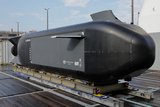
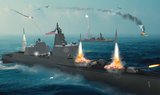
A rendering of Austal's T-AGOS design. (Image: Austal USA)
Austal USA has been awarded a contract worth up to $3.195 billion to build up to seven T-AGOS surveillance ships for the USN.


The Alabama-based shipyard has received a $113 million contract for detail design of the USN’s Auxiliary General Ocean Surveillance Ship T-AGOS 25 class.
Options under the contract for constructing up to seven ships bring its cumulative potential value to $3.195 billion.
Operated by Military Sealift Command (MSC), T-AGOS ships support anti-submarine warfare operations by offering passive and active acoustic surveillance capabilities.
Related Articles
Austal Australia converts patrol boat into unmanned vessel
Netherlands to arm ships and submarines with Tomahawk missiles
US Navy anti-sub exercise puts crewed-uncrewed teaming to the test
The 110m steel ‘small waterplane area twin hull’ (SWATH) vessels measure 110m long and gather data using Surveillance Towed-Array Sensor System (SURTASS) equipment.
The award is the latest steel shipbuilding contract for Austal USA, which also builds the USN’s Towing, Salvage and Rescue (T-ATS) ships and Auxiliary Floating Drydock Medium (AFDM).
The company is also building the USCG’s Heritage-class offshore patrol cutters (OPCs).
Austal USA has teamed with L3Harris, Noise Control Engineering, TAI Engineering and Thoma-Sea Marine Constructors to deliver T-AGOS ships from its facility in Mobile, Alabama.
Related Programmes in Defence Insight

More from Naval Warfare
-
![FNSS looks to put uncrewed vehicles at the front of amphibious assaults]()
FNSS looks to put uncrewed vehicles at the front of amphibious assaults
The new platform is designed to put reconnaissance, obstacle clearance and fire support ahead of the crewed force in a contested landing.
-
![Industry sees opportunity in Australia’s shift to networked undersea warfare]()
Industry sees opportunity in Australia’s shift to networked undersea warfare
Australia’s new defence innovation strategy indicates a shift from platform-centric to network-centric undersea warfare, with Ocius and Anduril Industries pointing to fast-growing opportunities for local industry.
-
![Asia-Pacific emerges as the largest export market for US-made USVs]()
Asia-Pacific emerges as the largest export market for US-made USVs
Asian customers have placed one of the largest known international purchases of US-built uncrewed surface vessels, highlighting accelerating regional demand for autonomous maritime capabilities and distributed naval operations.