


Can NATO’s CUAS marketplace turn urgent demand into deliveries?
Framework contracts and leasing options aim to shorten acquisition timelines, while manufacturing partnerships could help suppliers scale production to meet allied demand.


Solutions will be deployed in challenging, multi-domain scenarios. (Photo: US Air Force)
The US Southern Command (SOUTHCOM) is seeking industry partners to support its effort to improve ISR capabilities. The service is interested in testing advanced sensors and technologies to be deployed in challenging, multi-domain scenarios, as well as in disaster and humanitarian relief assistance operations.
It intends to provide an innovation testbed environment during its exercises and joint operations in order to identify longer-range solutions fitted with artificial intelligence (AI) and machine learning (ML) capabilities, as well as with renewable energy or alternative power sources.
The technologies and equipment should allow for integration with DoD’s inventory and with systems operated by
Our news & analysis is now part of Defence Insight®
A Basic-level or higher Defence Insight subscription is now required to view this content.


Framework contracts and leasing options aim to shorten acquisition timelines, while manufacturing partnerships could help suppliers scale production to meet allied demand.
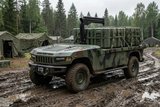
The US is pursuing multiple UGV programmes, from commercial robotic platforms to new autonomy technologies. The combination of these efforts could prove key to turning ambition into operational capability.

NATO is looking to artificial intelligence to provide integration between different C2 systems to create a common operational picture, potentially offering a faster route to interoperability than the slow-moving processes of NATO standards committees.

The large-scale exercise in Latvia was the culmination of three experimentation initiatives to see how platforms, weapons and systems could fit into the alliance’s Eastern Flank Deterrence Initiative. As well as forces, it brought together companies and equipment.

Canada plans to acquire at least 120 uncrewed aerial systems through two competitions with combined funding ceilings of C$32 million.

New counter-drone technologies, autonomous launchers and manufacturing modernisation initiatives highlighted emerging opportunities for defence suppliers, while the UK advanced a major military vehicle procurement programme.

Connect with us on socials


