US Marine Corps advances amphibious reconnaissance capabilities
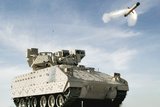
BAE Systems successfully tested Lockheed Martin Skunk Works’ Stalker and Indago sUAS on an Amphibious Combat Vehicle C4/UAS variant.
BAE System’s ACV C4/UAS vehicle is a mobile systems integration lab built to demonstrate the technology marines need to conduct reconnaissance, surveillance and acquisition capabilities.
The systems particularly enhance the ability of soldiers to sense and communicate targets over the horizon using C4 systems.
Skunk Work’s Stalker and Indago UAS are some of the technology components that the ACV C4/UAS employs to achieve this goal.
The Indago and Stalker UAS were tested along with a number of other unspecified products as part of contractor verification testing. Following this testing, the USMC will conduct its own series of tests to assess if the ACV C4/UAS is an appropriate solution for the Advanced Reconnaissance Vehicle programme.
The USMC launched the Advanced Reconnaissance Vehicle programme to replace its ageing General Dynamics Land Systems LAV-25 fleet.
According to Shephard Defence Insight, approximately 500 ARVs are expected to be procured by the USMC with deliveries scheduled between 2026 and 2032. The programme is expected to be worth between $1.8 and $6.8 billion.
Related Programmes in Defence Insight



More from Land Warfare
-
![AUSA 2026: companies adapt munitions and missiles for greater effect at lower costs]()
AUSA 2026: companies adapt munitions and missiles for greater effect at lower costs
Rather than developing entirely new weapons, defence companies are looking to build on existing weapons and systems to deliver greater capability, control costs and accelerate fielding.
-
![With changing patterns in Middle Eastern procurement, is Europe missing out?]()
With changing patterns in Middle Eastern procurement, is Europe missing out?
Traditional suppliers are struggling to meet the Middle East’s armoured vehicle modernisation needs, creating opportunities for South Korean manufacturers and regional defence industries.
-
![AUSA 2026: CUAS market expands as suppliers target new threats and operational requirements]()
AUSA 2026: CUAS market expands as suppliers target new threats and operational requirements
New developments from MARSS, MyDefence, Mountain Horse Solutions and Rafael suggest that future counter-drone protection will increasingly depend on combining advanced detection, rapid interception and integrated defensive networks.