US increases investments in mortar production capacities
Army mortarmen fire an M120A1 120 mm towed mortar system during a fire support coordination exercise at Camp Adazi, Latvia. (Photo: US Army/US DoD)
The US Army and companies of the defence industrial base have been expanding and upgrading their facilities as well as improving capabilities to produce mortar systems and rounds.


The high-intensity conflict between Russia and Ukraine and the growing demand for mortars worldwide have been bolstering the defence market. Aware of the need to be prepared to supply large amounts of rounds and systems, the US has been increasing efforts to improve its manufacturing capacities.
The US Army and companies of the defence industrial base have recently announced investments in expanding and upgrading facilities as well as in enhancing production capabilities.
Part of the army’s Organic Industrial Base (OIB), the Watervliet Arsenal (WVA), will pass through a 15-year modernisation process which will involve the replacement of the rotary forge
Our news & analysis is now part of Defence Insight®
A Basic-level or higher Defence Insight subscription is now required to view this content.



More from Land Warfare
-
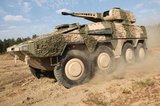
![Boxer lands another order as contracts and opportunities build momentum]()
Boxer lands another order as contracts and opportunities build momentum
As Germany prepares its €25 billion order under the Arminius framework – the biggest Boxer procurement to date – the platform could become an increasingly powerful contender in European competitions.
-
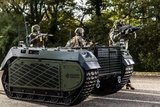
![Trans-European iMUGS2 uncrewed systems programme set for three-day exercise in 2028]()
Trans-European iMUGS2 uncrewed systems programme set for three-day exercise in 2028
The next stage of the Integrated Modular Unmanned Ground System (iMUGS) programme, dubbed iMUGS2, was launched in November 2025. Three major demonstrations are planned before the end of 2028.
-
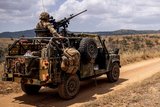
![British Army Land Rover replacement plan inches forward]()
British Army Land Rover replacement plan inches forward
The UK Ministry of Defence has proposed a selection date of May 2027 for the Land Rover replacement requirement, with deliveries expected through to 2036. Next month’s DVD exhibition will be a key shop window for bidders.
-
![Snow patrol and access all areas: the Arctic all-terrain vehicles market grows]()
Snow patrol and access all areas: the Arctic all-terrain vehicles market grows
The procurement and planned procurement of articulated tracked all-terrain vehicles is being driven by a need to replace older platforms and an acknowledgement of a capability gap for Arctic regions.