US details new $2.6 billion package of support for Ukraine
Ukrainian artillerymen fire the M109 self-propelled howitzer during training at Grafenwoehr Training Area, Germany. (Photo: US DoD)
The US has detailed its latest security assistance package for Ukraine worth $2.6 billion in arms and equipment.


The package is split across $500 million in Presidential drawdowns and $2.1 billion of US DoD Ukraine Security Assistance Initiative (USAI) support.
A Department of State spokesperson said the package demonstrated the US commitment to Ukraine’s ability to defend itself.
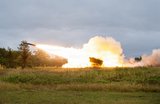
The Presidential Drawdown includes air defence interceptors, HIMARS ammunition, artillery shells, mortar rounds, tankers, and other equipment.
Related Articles
Slovakia to get US attack helicopters after donating jets to Ukraine
EU to supply Ukraine with one million artillery shells
EOS of Australia to deliver one hundred RWS to Ukraine
The USAI support includes NASAMS munitions, 30mm C-UAS gun tucks, ten mobile C-UAS laser-guided rocket systems, air surveillance radars, Javelin ATGMs, rocket launchers and ammunition and a host of other support.
The US has provided Ukraine with aid to the value of over $35.1 billion since the start of the Russian invasion last February.


More from Land Warfare
-
![With changing patterns in Middle Eastern procurement, is Europe missing out?]()
With changing patterns in Middle Eastern procurement, is Europe missing out?
Traditional suppliers are struggling to meet the Middle East’s armoured vehicle modernisation needs, creating opportunities for South Korean manufacturers and regional defence industries.
-
![AUSA 2026: CUAS market expands as suppliers target new threats and operational requirements]()
AUSA 2026: CUAS market expands as suppliers target new threats and operational requirements
New developments from MARSS, MyDefence, Mountain Horse Solutions and Rafael suggest that future counter-drone protection will increasingly depend on combining advanced detection, rapid interception and integrated defensive networks.
-
![US Army seeks CAML-Lite autonomous launcher prototypes for 2027 live-fire trials]()
US Army seeks CAML-Lite autonomous launcher prototypes for 2027 live-fire trials
The optionally crewed, C-130-transportable platforms would combine modular offensive and defensive fires with autonomous resupply, with demonstrations planned for Talisman Sabre 2027.